2026 Nearshoring Surge: Boosting Mexico's Exports by 14% for US Supply Chains
Advertisements
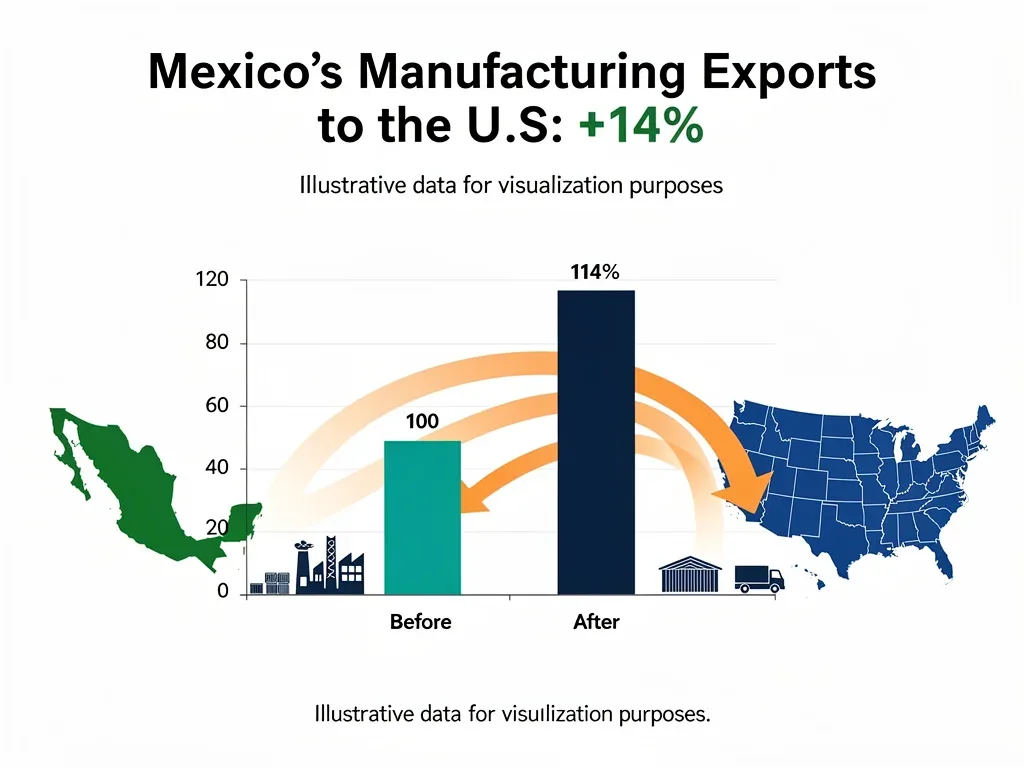
The 2026 nearshoring surge in Mexico is presented as a major shift for North American manufacturing, with the source projecting a 14% increase in Mexican manufacturing exports to the United States.
This movement reflects growing interest in shorter supply chains, lower logistical exposure, and closer integration between U.S. companies and Mexican production hubs.
The expansion also highlights how manufacturing, infrastructure, labor, and trade policy are becoming increasingly connected across the region.
Understanding the Nearshoring Phenomenon
Nearshoring refers to relocating business operations or production closer to the primary market they serve.
Mexico is presented as a major beneficiary because of its proximity to the United States, existing infrastructure, and trade relationships.
The source connects this shift directly with efforts to reduce transit times, lower exposure to global disruptions, and strengthen supply chain resilience.
Drivers Behind the 2026 Export Growth
Several factors are described as contributing to the projected increase in Mexico’s manufacturing exports to the United States.
These include geopolitical tensions, higher labor costs in distant markets, USMCA rules, and growing concern about supply chain stability.
Investments in industrial parks, logistics, and production capacity are also presented as important drivers behind the 2026 nearshoring surge in Mexico.
Geopolitical Shifts and Supply Chain Resilience
Global uncertainty has encouraged companies to reconsider dependence on long and complex manufacturing networks.
Producing closer to the United States can reduce exposure to trade disputes, shipping delays, and other external disruptions.
Shorter supply chains may also help companies respond faster to changing demand and improve control over production processes.
Reduced geopolitical risks compared to distant markets.
Faster response times to market shifts and consumer demands.
Enhanced control over production processes and quality standards.
Diversification of manufacturing locations to avoid single-point failures.
Economic Incentives and Cost Efficiencies
The economic attraction of nearshoring extends beyond labor costs and includes transportation, inventory, and logistics efficiencies.
Shorter routes can reduce freight expenses while helping companies hold less inventory across extended international supply chains.
The source presents these combined savings as an important reason companies are expanding manufacturing operations in Mexico.
Key Sectors Benefiting from Nearshoring
The source identifies automotive, electronics, aerospace, and medical devices as industries with strong exposure to the nearshoring trend.
These sectors often depend on specialized manufacturing, skilled workers, and efficient delivery schedules.
Their expansion helps support the projected export growth associated with the 2026 nearshoring surge in Mexico.
Automotive Industry's Strategic Relocation
The automotive sector has long played an important role in trade between Mexico and the United States.
Nearshoring strengthens this connection by moving production and component manufacturing closer to major North American assembly operations.
The source also highlights electric vehicles and related components as areas where fast logistics and specialized industrial clusters may become particularly important.
Proximity to major U.S. assembly plants.
Access to a skilled and cost-effective labor force.
Streamlined cross-border logistics for components and finished vehicles.
Development of specialized industrial clusters for EV production.
Growth in Electronics and High-Tech Manufacturing
Electronics manufacturing is another area presented as benefiting from Mexico’s growing role in regional production.
Companies can use Mexican facilities for components and finished products that require precision manufacturing and faster delivery cycles.
This expansion is described as evidence of Mexico’s increasing capability in more advanced manufacturing activities.
Impact on U.S. Supply Chains
The projected 14% increase in Mexican manufacturing exports could have significant consequences for U.S. supply chains.
Closer production can improve stability, reduce dependence on distant suppliers, and simplify transportation across important industries.
The source links these benefits directly to the 2026 nearshoring surge in Mexico and its role in strengthening regional manufacturing networks.
Enhanced Resilience and Risk Mitigation
Nearshoring can make supply chains less vulnerable to disruptions associated with long-distance transportation.
Production closer to the U.S. market may reduce exposure to port congestion, distant natural disasters, and geopolitical conflicts.
This can also improve inventory planning and allow companies to react more quickly when unexpected problems occur.
Reduced exposure to international shipping delays.
Greater flexibility in managing inventory and production schedules.
Improved traceability and oversight of manufacturing processes.
Stronger regional economic integration for collective stability.
Cost Optimization and Lead Time Reduction
Shorter transportation routes can reduce freight costs and shorten delivery times for U.S. businesses.
Reduced lead times may also decrease the need to maintain large inventories as protection against distant supply disruptions.
These efficiencies are presented as another important benefit of integrating more Mexican manufacturing into U.S. supply chains.
Challenges and Considerations for Nearshoring
Despite the benefits, companies moving production to Mexico may face regulatory, infrastructure, and workforce challenges.
Successful expansion requires careful planning, local knowledge, and coordination with suppliers, authorities, and service providers.
The source also highlights environmental and social responsibilities as increasingly important considerations for long-term operations.
Navigating Regulatory and Legal Frameworks
Companies operating in Mexico need to understand local labor, environmental, tax, customs, and administrative requirements.
Compliance with these rules is presented as essential for maintaining stable operations and avoiding unnecessary delays.
Local legal and consulting support can help companies navigate regulatory requirements during expansion or relocation.
Understanding local labor laws and employment regulations.
Compliance with environmental protection standards and permits.
Navigating import/export duties and customs procedures effectively.
Adhering to intellectual property protection laws.
Infrastructure Development and Workforce Training
Some regions may require additional infrastructure investments to support large manufacturing operations efficiently.
Reliable transportation, utilities, communications, and industrial facilities remain important for maintaining production capacity.
Workforce training is equally important because advanced manufacturing requires technicians, engineers, and other specialized professionals.
Mexico's Economic Outlook and Future Prospects
The source presents nearshoring as a potential driver of broader economic growth beyond export figures alone.
New manufacturing projects can generate employment, domestic investment, technology transfer, and demand for logistics and professional services.
The momentum created by the 2026 nearshoring surge in Mexico may therefore influence several parts of the country’s economy.
Job Creation and Local Economic Development
Manufacturing expansion can create direct jobs in production facilities across different technical and professional levels.
It can also create indirect employment in logistics, maintenance, services, construction, and business support.
The source describes these effects as capable of stimulating spending and additional investment in communities near major manufacturing hubs.
Direct employment opportunities in manufacturing facilities.
Indirect job creation in logistics, services, and support industries.
Increased tax revenues for local and federal governments.
Stimulation of local businesses and entrepreneurial ventures.
Technological Advancement and Innovation Transfer
Advanced manufacturing investment can also bring new technology, processes, and expertise into Mexican industrial operations.
This exchange may support modernization while expanding the technical capabilities of local workers and suppliers.
The source connects technology transfer with longer-term improvements in Mexico’s manufacturing competitiveness.
Government Policies and Support for Nearshoring
The source describes both Mexican and U.S. authorities as supporting initiatives that can facilitate regional manufacturing and trade.
These efforts include investment incentives, customs improvements, infrastructure development, and coordination around border logistics.
Government support is presented as an important factor in creating a more predictable environment for companies considering nearshoring.
Incentives for Foreign Direct Investment
Mexico is described as offering measures designed to encourage foreign companies to establish or expand manufacturing operations.
These can include tax incentives, permitting support, workforce programs, and industrial development initiatives.
Such measures may reduce barriers for companies evaluating Mexico as part of their nearshoring strategy.
Tax incentives and preferential customs treatment.
Support programs for industrial development.
Streamlined bureaucratic processes for business establishment.
Government-backed initiatives for infrastructure upgrades.
Cross-Border Collaboration and Infrastructure Projects
Efficient nearshoring depends on cooperation between U.S. and Mexican authorities around transportation and border procedures.
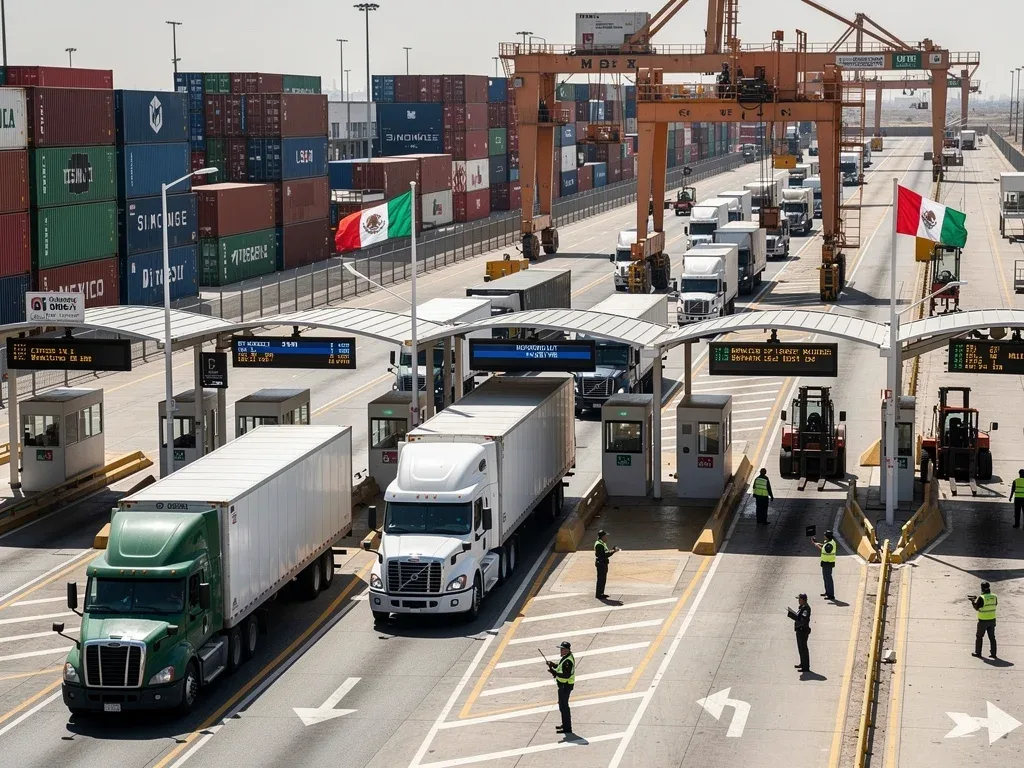
Infrastructure improvements at crossings and along major logistics corridors can help manage greater volumes of manufactured goods.
These investments support the physical movement of products associated with the 2026 nearshoring surge in Mexico.
Future Outlook and Sustainability
The source presents Mexico’s nearshoring-driven manufacturing growth as a trend that could continue beyond 2026.
Long-term success will depend on continuous investment in infrastructure, education, workforce capabilities, and regulatory stability.
Sustainability will also require manufacturing growth to remain aligned with environmental standards and responsible labor practices.
Long-Term Growth and Diversification
Nearshoring may expand into additional manufacturing sectors as companies continue to reconsider global production strategies.
A broader industrial base could reduce dependence on individual sectors and strengthen Mexico’s position within regional supply chains.
Maintaining competitiveness will depend on skilled labor, strong local suppliers, infrastructure, and the ability to support advanced technologies.
Expansion into new manufacturing niches and advanced technologies.
Continuous improvement in workforce skills and educational offerings.
Strengthening of local supply chains to support foreign investment.
Commitment to sustainable manufacturing practices.
Environmental and Social Responsibilities
Expanding manufacturing activity also increases the importance of environmental responsibility and sustainable production practices.
Companies face growing expectations to manage resources efficiently and maintain appropriate labor standards.
The source presents responsible growth as essential for ensuring that the benefits of nearshoring do not come at the expense of environmental or social conditions.
Key Point | Brief Description |
|---|---|
Export Boost | Mexico's manufacturing exports to the U.S. projected to increase by 14% by 2026 due to nearshoring. |
Key Drivers | Geopolitical shifts, USMCA, cost efficiencies, and supply chain resilience are primary factors. |
Impact on US | Enhanced supply chain stability, reduced lead times, and increased competitiveness for U.S. businesses. |
Challenges Ahead | Navigating regulations, infrastructure development, and ensuring skilled workforce availability are crucial. |
Frequently Asked Questions About Nearshoring in Mexico
What is nearshoring and why is it important for U.S. supply chains?▼
Nearshoring means relocating production closer to the main market, which can reduce transportation time, logistical complexity, and exposure to global disruptions.
Which industries in Mexico are most affected by the nearshoring surge?▼
The source identifies automotive, electronics, aerospace, and medical devices as some of the main sectors benefiting from this trend.
How does the USMCA agreement support nearshoring to Mexico?▼
The source describes USMCA as providing a stable trade framework that supports investment and cross-border manufacturing between Mexico, the United States, and Canada.
What are the primary challenges companies face when nearshoring to Mexico?▼
The main challenges highlighted are regulatory complexity, infrastructure needs, workforce availability, and the need for careful local planning.
What long-term economic benefits can Mexico expect from this nearshoring trend?▼
The source points to job creation, foreign investment, technology transfer, industrial diversification, and stronger integration into North American supply chains.
Looking Ahead
The projected 14% increase in Mexico's manufacturing exports reflects the scale of the nearshoring shift described in the source.
Greater regional integration could reshape supply chains by bringing production, logistics, and investment closer to major U.S. markets.
Future progress will depend on policy, infrastructure, workforce development, and the ability to maintain competitive and sustainable manufacturing operations.