Mexico’s Trade Balance 2026: Export Growth 8%, Import Challenges
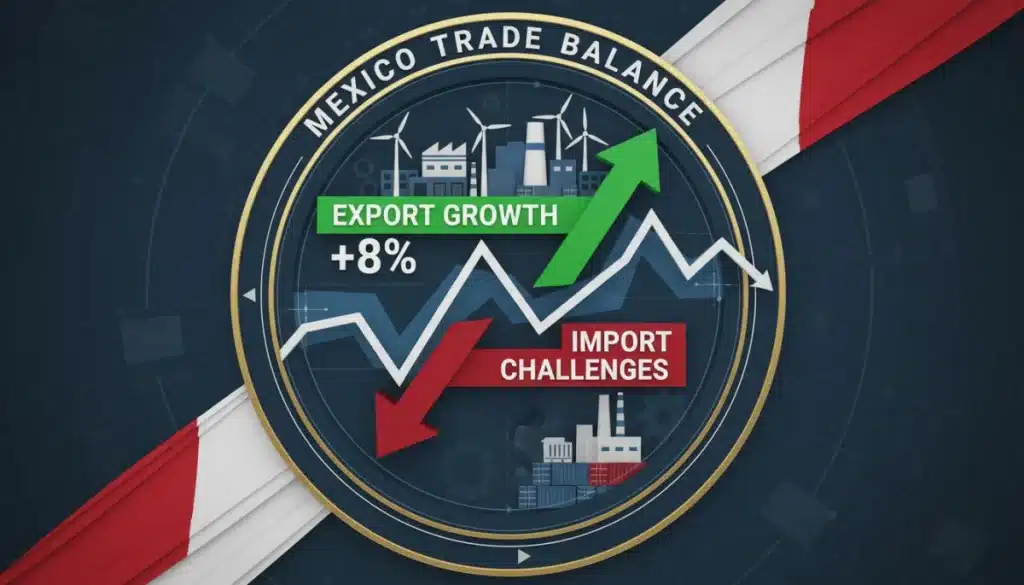
Latest developments on Mexico’s trade balance in 2026 show strong export momentum alongside rising concerns over import growth, tariff pressures, and uncertainty surrounding the future review of the USMCA trade agreement. Recent trade data showed Mexico swinging between large monthly surpluses and deficits as exports accelerated in sectors such as manufacturing, technology equipment, automotive production, and food exports.
Industry analysts say export growth above 8% has been supported by nearshoring, increased U.S. demand, and Mexico’s expanding role in North American supply chains, particularly in electronics, data-center infrastructure, and industrial manufacturing. At the same time, import challenges remain significant as purchases of intermediate goods and industrial inputs continue rising, while trade tensions, tariff threats, and uncertainty over the 2026 USMCA review create additional pressure for businesses and investors.
Readers should monitor future U.S.-Mexico trade negotiations, tariff policy changes, export diversification efforts toward Europe, and evolving geopolitical risks that may influence supply chains throughout 2026. Economists also recommend closely following inflation trends, exchange-rate movements, industrial production, and updates from INEGI and Banxico as Mexico balances export expansion with slowing economic growth and rising global uncertainty.
Understanding Mexico’s Trade Balance in 2026
As 2026 approaches, analysts are intensely scrutinizing Mexico’s trade performance, particularly the projected 8% growth in exports. This positive outlook is largely fueled by strategic investments and a favorable global trade environment, reflecting a robust manufacturing sector.
Advertisements
However, this optimistic export forecast is juxtaposed with persistent import challenges that could significantly impact the overall Mexico Trade Balance 2026. These challenges range from global supply chain disruptions to domestic logistical bottlenecks, posing a complex scenario for policymakers.
The interplay between strong export growth and lingering import issues will define the trajectory of Mexico’s economy in the coming year. Understanding these dynamics is crucial for businesses and investors looking to navigate the Mexican market effectively.
Key Drivers of Export Growth
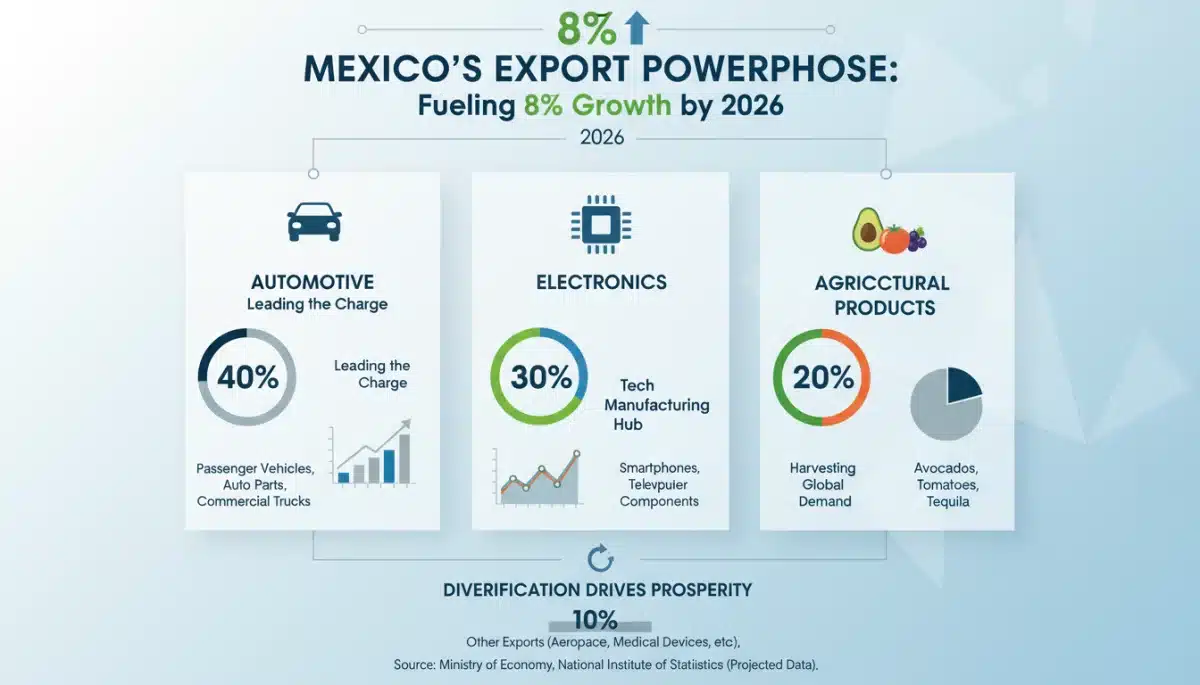
Several factors are converging to propel Mexico’s exports forward, with nearshoring emerging as a dominant force. Companies are increasingly relocating their production facilities closer to major markets, particularly the United States, to reduce costs and enhance supply chain resilience.
The automotive sector, electronics manufacturing, and agricultural exports continue to be primary contributors to this growth. These industries benefit from established infrastructure, skilled labor, and preferential trade agreements, cementing Mexico’s position as a vital manufacturing hub.
Furthermore, government initiatives aimed at fostering foreign direct investment and improving trade logistics are also playing a significant role. These efforts create a more conducive environment for businesses to expand their export operations and reach new markets.
Persistent Import Challenges Facing Mexico
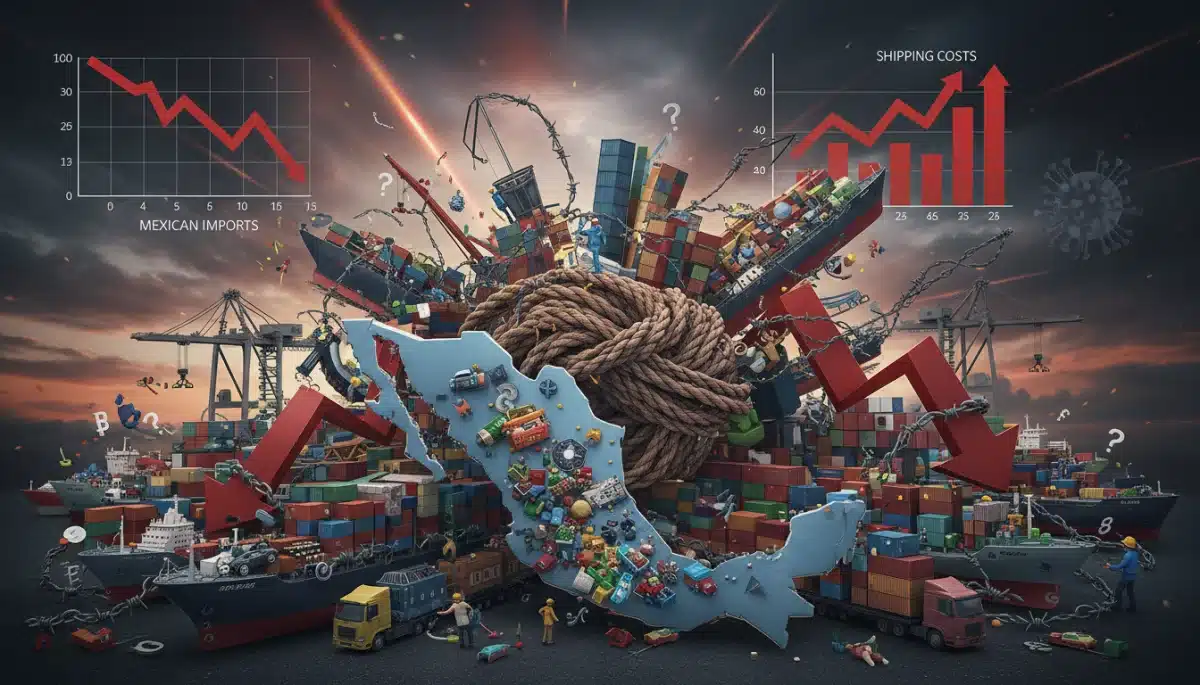
Despite the promising export landscape, Mexico’s import sector faces a myriad of challenges that could temper overall economic gains. Global supply chain disruptions, a lingering effect of the pandemic and geopolitical tensions, continue to cause delays and increased costs for imported goods.
Rising inflation and currency fluctuations also contribute to the complexity, making essential imports more expensive for Mexican consumers and businesses. These factors directly impact the purchasing power and operational costs across various industries, creating a ripple effect throughout the economy.
Addressing these import challenges will require a multi-faceted approach, including diversifying sourcing, investing in domestic production capabilities, and strengthening trade relationships. Failure to mitigate these issues could undermine the positive impact of export growth on the Mexico Trade Balance 2026.
Global Supply Chain Disruptions
- Shipping delays and congestion at major ports remain a significant impediment.
- Increased freight costs are driving up the price of imported raw materials and finished goods.
- Geopolitical conflicts continue to create uncertainty and disrupt established trade routes.
These disruptions are not merely transient; they represent a fundamental shift in global trade dynamics. Mexican businesses are adapting by seeking alternative suppliers and investing in localized production where feasible, yet the overall impact on import costs remains substantial.
Impact of Nearshoring on Trade Dynamics
Nearshoring initiatives are profoundly reshaping Mexico’s trade landscape, driving both export growth and influencing import patterns. The influx of foreign companies establishing operations in Mexico is boosting manufacturing output, which directly translates into higher export volumes, particularly to the North American market.
This phenomenon, while beneficial for exports, also creates increased demand for certain imported components and machinery. As new factories come online, they require specialized equipment and raw materials that may not be readily available domestically, thus contributing to the import figures.
The long-term effect of nearshoring on the Mexico Trade Balance 2026 will depend on the extent to which domestic supply chains can develop to meet the demands of these new industries. This presents both an opportunity for local businesses and a potential challenge for managing import dependency.
Strategic Investments and Policy Support
The Mexican government has been actively promoting foreign direct investment through various incentives and policy reforms. These measures aim to attract more companies to establish manufacturing bases within the country, further solidifying its position in global supply chains.
Investments in infrastructure, such as port expansions and improved transportation networks, are critical to supporting both increased exports and the efficient handling of imports. These strategic developments are essential for maintaining Mexico’s competitiveness in the global market.
Furthermore, bilateral agreements and participation in international trade blocs continue to provide a stable framework for trade activities. Such policy support is instrumental in creating a predictable and attractive environment for businesses engaged in cross-border commerce.
Sectoral Analysis: Export Growth Leaders
Mexico’s automotive industry remains a powerhouse, with continued investment from global manufacturers driving robust export figures. The shift towards electric vehicle production is also creating new avenues for growth, positioning Mexico as a key player in this evolving market.
The electronics sector, including consumer electronics and aerospace components, is another significant contributor. Companies are leveraging Mexico’s proximity to the U.S. and skilled workforce to produce high-value goods for export, reinforcing the positive outlook for Mexico Trade Balance 2026.
Agricultural exports, particularly fresh produce and beverages, also show consistent growth, benefiting from favorable climate conditions and established trade routes. These diverse sectors collectively underpin the projected 8% export expansion, showcasing Mexico’s broad economic capabilities.
Challenges within Export Sectors
- Labor shortages in specialized manufacturing areas could hinder production capacity.
- Fluctuations in global demand and commodity prices introduce market volatility.
- Maintaining international quality standards requires continuous investment in technology and training.
Despite these challenges, the resilience and adaptability of Mexican export industries have been notable. Continuous innovation and strategic planning are essential to sustain this growth trajectory and ensure long-term competitiveness.
Addressing Import Dependency and Diversification
A critical aspect of improving the Mexico Trade Balance 2026 involves strategically addressing import dependency. While some imports are unavoidable, particularly for advanced machinery and specialized components, there are opportunities to foster domestic production for certain goods.
Government and industry are exploring initiatives to localize supply chains, reducing reliance on volatile international markets. This involves supporting small and medium-sized enterprises (SMEs) to develop capabilities that can substitute current imports, promoting economic self-sufficiency.
Diversifying import sources is also a key strategy to mitigate risks associated with disruptions from any single region. By establishing trade relationships with a wider array of countries, Mexico can enhance its supply chain resilience and secure more stable access to essential goods.
The Role of Infrastructure in Trade Performance
Robust infrastructure is fundamental to Mexico’s trade performance, directly impacting both export efficiency and the cost of imports. Investments in modernizing ports, expanding highway networks, and improving rail systems are crucial for facilitating the swift movement of goods.
Inefficient logistics and outdated infrastructure can lead to significant delays and increased operational costs, eroding the competitive advantage gained from strong export growth. Therefore, continuous investment in these areas is paramount for sustaining positive trade dynamics.
The development of industrial parks and special economic zones also plays a vital role by providing integrated facilities for manufacturing and logistics. These hubs attract foreign investment and streamline the entire trade process, contributing positively to the overall Mexico Trade Balance 2026.
Future Infrastructure Projects
- New port developments are aimed at increasing cargo capacity and reducing turnaround times.
- Highway expansions are designed to connect key industrial centers with major trade routes.
- Technological upgrades in customs and border crossings are enhancing efficiency and reducing bureaucratic hurdles.
These projects, currently underway or in the planning stages, underscore Mexico’s commitment to improving its trade infrastructure. Their successful implementation will be critical in supporting the nation’s economic growth and ensuring a favorable trade balance.
Policy Outlook and Economic Projections
Looking ahead to 2026, Mexico’s economic policies are expected to remain focused on fostering stability and promoting sustainable trade growth. Government efforts to control inflation, maintain fiscal discipline, and attract foreign investment will be key determinants of the overall economic climate.
The ongoing dialogue with major trading partners, particularly the United States and Canada under the USMCA agreement, will continue to shape trade policies. Ensuring smooth cross-border trade and resolving disputes efficiently are crucial for maintaining export momentum.
Economists project that while the 8% export growth is achievable, the extent of import challenges will significantly influence the final Mexico Trade Balance 2026. A proactive approach to mitigating these challenges will be essential for realizing the full potential of Mexico’s trade sector.
Potential Economic Headwinds
Global economic slowdowns or recessions could dampen demand for Mexican exports, impacting the projected growth. Geopolitical instability also presents a risk, potentially disrupting supply chains further and increasing the cost of essential imports.
Domestic factors, such as political uncertainty or unforeseen natural disasters, could also affect economic stability and trade flows. Therefore, a resilient and adaptable economic framework is necessary to navigate these potential headwinds.
The government’s ability to implement effective counter-cyclical policies and support industries through challenging periods will be vital. Continuous monitoring of international and domestic indicators will be crucial for timely interventions and strategic adjustments.
| Key Point | Brief Description |
|---|---|
| Export Growth | Mexico projects 8% export growth, driven by nearshoring and key sectors. |
| Import Challenges | Global supply chain disruptions and inflation complicate import stability. |
| Nearshoring Impact | Boosts exports but increases demand for specific imported components. |
| Policy Outlook | Government focuses on stability, investment, and trade agreements for growth. |
Frequently Asked Questions About Mexico’s Trade Balance
The primary forecast indicates an 8% growth in exports for Mexico in 2026. This positive outlook is largely attributed to the robust performance of key manufacturing sectors and the increasing impact of nearshoring initiatives, strengthening Mexico’s position in global trade.
Mexico’s imports in 2026 face significant challenges, primarily from global supply chain disruptions, elevated shipping costs, and inflationary pressures. These factors increase the cost and complexity of acquiring essential goods and raw materials, impacting various domestic industries.
Nearshoring significantly boosts Mexico’s exports by attracting foreign manufacturing investment, leading to increased production. However, it also creates higher demand for imported components and machinery, posing a dual effect on the overall Mexico Trade Balance 2026 dynamics.
Mexico’s export growth is primarily driven by the automotive, electronics, and agricultural sectors. These industries benefit from strategic investments, skilled labor, and favorable trade agreements, positioning them as key contributors to the projected 8% export expansion.
To address import challenges, Mexico is focusing on diversifying import sources, promoting domestic production to reduce dependency, and investing in infrastructure to improve logistics. These strategies aim to enhance supply chain resilience and stabilize the Mexico Trade Balance 2026.
Looking Ahead
The outlook for Trade Balance highlights a dynamic economic landscape. The robust export growth, largely fueled by nearshoring, signals Mexico’s increasing integration into global supply chains. However, persistent import challenges necessitate strategic interventions.
Policymakers will need to balance the benefits of export expansion with efforts to mitigate import-related vulnerabilities. Continuous investment in infrastructure and the diversification of supply chains are crucial for ensuring long-term economic stability and a favorable trade balance.
Monitoring global economic trends and domestic policy responses will be essential for understanding the evolving trajectory of Mexico’s trade performance. The interplay of these factors will define the nation’s economic resilience in the coming years.