Navigating Mexico’s Evolving Labor Laws: 5 Critical Updates for 2026

Recent developments in Labor Laws continue to focus on worker protections, wage growth, labor formalization, and workplace compliance. Policymakers and business groups are closely monitoring reforms affecting working hours, outsourcing practices, union representation, and employee rights.
These changes matter because they influence labor costs, hiring strategies, productivity, and foreign investment decisions. Employers are increasingly reviewing workplace policies and compliance procedures to align with evolving regulations and avoid potential penalties.
Looking ahead, stakeholders should monitor proposed reductions to the standard workweek, minimum wage adjustments, labor inspection activity, and implementation guidance from Mexican authorities. These developments could have significant implications for both employers and workers as Mexico’s labor framework continues to evolve.
Advertisements
Understanding Mexico’s Shifting Labor Landscape
Mexico’s labor legal framework is undergoing significant revisions, driven by both domestic policy goals and international commitments, notably the USMCA. These changes aim to enhance worker protections, promote fairer employment practices, and strengthen union democracy across the nation.
Businesses operating within Mexico must closely monitor these legislative shifts to ensure full compliance and adapt their operational strategies effectively. Failing to do so can result in substantial penalties, legal challenges, and reputational damage in a rapidly evolving regulatory environment.
The year 2026 is poised to be a pivotal period, with several key amendments and new regulations expected to fully take effect or demonstrate their comprehensive impact. Proactive engagement with these updates is crucial for all stakeholders.
The Rise of Union Democracy and Collective Bargaining
One of the most profound changes in Labor Laws centers on union democracy. New regulations mandate secret ballot votes for union leadership elections and collective bargaining agreement approvals, fostering greater worker representation.
This shift aims to eradicate long-standing practices of protection contracts, where unions often negotiated with employers without genuine worker consent. The new framework empowers employees, giving them a direct voice in their representation and working conditions.
Employers now face increased scrutiny regarding their interactions with unions, requiring transparency and strict adherence to democratic processes. The implications extend to how collective bargaining agreements are negotiated, validated, and implemented, demanding a new level of diligence.
Key Changes in Union Representation
- Secret Ballot Voting: All collective bargaining agreements and union leadership elections must now be approved through individual, secret ballots by workers.
- Legitimation Process: Existing collective bargaining agreements require a legitimation process, where workers must approve them via secret ballot to remain valid.
- Freedom of Association: Enhanced protections for workers to choose their union representation without employer interference or coercion.
Minimum Wage Adjustments and Social Benefits Expansion
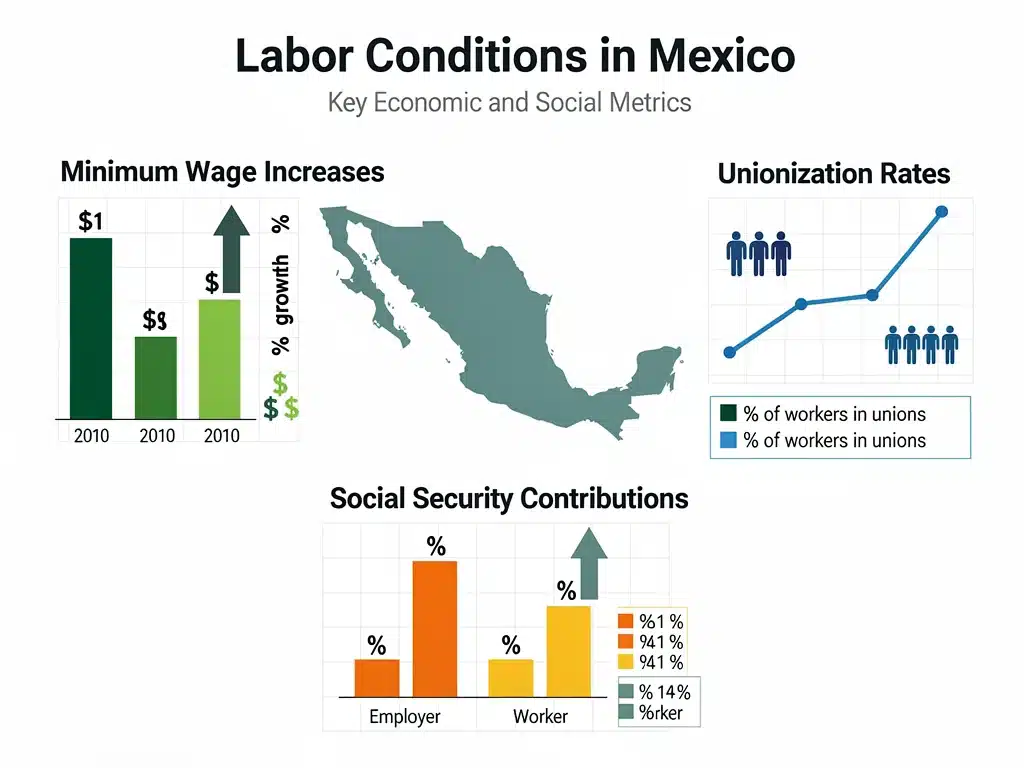
Mexico has seen consistent increases in its general minimum wage, a trend expected to continue into 2026, significantly impacting labor costs and worker welfare. These adjustments are part of a broader strategy to improve living standards and reduce income inequality across the country.
Beyond the minimum wage, there is a strong focus on expanding social benefits, including modifications to social security contributions and housing fund regulations. These changes aim to provide a more robust safety net for workers, ensuring better access to healthcare, pensions, and affordable housing.
Businesses must recalibrate their financial planning and human resources strategies to accommodate these rising labor costs and expanded benefit requirements. Understanding the nuances of these changes is vital for maintaining fiscal stability and attracting talent.
Impact on Employer Obligations
The ongoing minimum wage hikes directly affect payroll expenses, requiring companies to adjust their budgeting and compensation structures. This extends beyond just base salaries, influencing calculations for benefits linked to the minimum wage.
Furthermore, modifications to social security and INFONAVIT (housing fund) contributions necessitate careful review of compliance processes. Employers must ensure accurate and timely payments to avoid penalties and uphold their legal obligations.
These financial considerations are paramount for businesses as they navigate Labor Laws. Strategic planning around these costs is essential for long-term sustainability and competitiveness.
Outsourcing Regulations: A Continued Evolution
The comprehensive reforms to outsourcing (subcontracting) laws, enacted in recent years, continue to evolve, with ongoing clarifications and enforcement actions expected in 2026. These regulations primarily restrict specialized services outsourcing and prohibit staff outsourcing.
The objective is to eliminate abusive outsourcing practices that historically deprived workers of benefits and rights, ensuring that employees are directly recognized by their true employers. This has led to a significant shift in how companies manage their workforce and engage third-party providers.
Companies that previously relied heavily on outsourcing models have had to internalize vast portions of their workforce or drastically restructure their service agreements. Compliance with these stringent rules remains a critical area for businesses, as violations carry severe financial penalties.
Digitalization of Labor Processes and Remote Work
The increasing digitalization of labor processes and the formalization of remote work, or ‘teletrabajo,’ represents another critical component of Labor Laws. The pandemic accelerated the adoption of remote work, prompting legislative action to regulate it.
New provisions outline employer obligations for remote workers, including providing necessary equipment, covering a portion of utility costs, and ensuring the right to disconnect. These regulations aim to protect remote employees’ rights and ensure equitable working conditions.
For businesses, this means developing robust remote work policies that comply with legal requirements, from equipment provision to cybersecurity. Adapting to these digital labor norms is not just about compliance but also about optimizing productivity and employee well-being.
Remote Work Employer Responsibilities
- Equipment Provision: Employers must provide, maintain, and pay for necessary tools, including computers, ergonomic chairs, and internet access.
- Utility Reimbursement: A portion of electricity and internet costs incurred by remote workers must be covered by the employer.
- Right to Disconnect: Employees have the right to disconnect from work outside of their established working hours, promoting work-life balance.
Gender Equality and Non-Discrimination in the Workplace
Advancements in gender equality and non-discrimination policies are central to the current trajectory of Mexican labor law. Legislation seeks to eliminate gender pay gaps, prevent workplace harassment, and promote equal opportunities for all employees, regardless of background.
These updates mandate clear policies against discrimination, requiring companies to implement internal protocols for reporting and addressing harassment. The focus is on creating inclusive and respectful work environments where all individuals can thrive without prejudice.
Businesses are expected to actively promote diversity and inclusion, not just as a matter of compliance but as a core organizational value. This involves reviewing hiring practices, promotion criteria, and internal complaint mechanisms to ensure fairness and equity, a key aspect of Labor Laws.
Enforcement and Compliance Mechanisms
The effectiveness of these labor reforms hinges on robust enforcement and compliance mechanisms. Mexican labor authorities are strengthening their inspection capacities and imposing stricter penalties for non-compliance, signaling a more proactive regulatory environment.
Companies should anticipate increased audits and inspections from the Ministry of Labor and Social Welfare (STPS) and other relevant bodies. Demonstrating a clear commitment to compliance through documentation, training, and internal controls is paramount.
Understanding the procedural aspects of labor inspections and potential legal challenges is crucial. Proactive legal counsel and internal reviews can help mitigate risks and ensure businesses are well-prepared for the evolving regulatory landscape.
Preparing for Labor Inspections
Businesses should maintain meticulous records of employee contracts, payroll, social security contributions, and training programs. These documents are often the first items requested during a labor inspection and serve as primary evidence of compliance.
Regular internal audits can help identify and rectify potential areas of non-compliance before external inspections occur. Training HR personnel and management on the latest regulations ensures a consistent understanding and application of labor laws.
Engaging with labor law experts can provide invaluable guidance in preparing for inspections and developing robust compliance strategies. This proactive approach is essential for businesses Labor Laws successfully.
Future Outlook and Strategic Adaptations
The trajectory of Mexico’s labor laws indicates a sustained commitment to worker protection and fair employment practices. Businesses must view these changes not as isolated incidents but as part of a continuous evolution that demands strategic adaptation and foresight.
Anticipating further legislative developments and understanding their potential impact on operations, human resources, and financial performance is critical. This involves continuous monitoring of legislative discussions and engaging with industry associations.
Strategic adaptations might include investing in HR technology, restructuring compensation and benefits packages, and enhancing internal communication channels. Proactive planning ensures that companies remain agile and resilient in the face of ongoing regulatory shifts for Labor Laws.
| Key Update Area | Brief Description |
|---|---|
| Union Democracy | Mandatory secret ballot votes for union leadership and CBA approvals. |
| Minimum Wage & Benefits | Continued wage increases and expanded social security contributions. |
| Outsourcing Regulations | Strict rules on specialized services and prohibition of staff outsourcing. |
| Remote Work Formalization | Employer obligations for equipment, utilities, and right to disconnect. |
Frequently Asked Questions About Mexico’s Labor Law Updates
The primary goal is to strengthen worker rights, promote union democracy, and ensure fair employment practices. These reforms aim to eliminate corruption in unions and outsourcing, providing greater transparency and benefits for employees across Mexico, directly influencing Labor Laws.
Businesses must ensure that all collective bargaining agreements and union leadership elections are approved through genuine, secret ballot votes by workers. This requires increased transparency and prohibits employer interference in union affairs, demanding a careful approach to labor relations for Labor Laws.
The continued increase in minimum wage directly raises payroll costs for businesses. This also affects calculations for other benefits linked to the minimum wage, requiring companies to adjust their budgeting and compensation strategies to remain compliant and competitive, impacting Labor Laws.
Employers must provide necessary work equipment, cover a portion of utility costs (internet, electricity), and respect the employee’s right to disconnect outside of working hours. These provisions aim to ensure equitable and safe working conditions for remote employees, a key part of Labor Laws.
Businesses should conduct regular internal audits, maintain meticulous records, and seek expert legal counsel. Training HR and management on the latest regulations is crucial. Proactive engagement with legal advisors helps mitigate risks and ensures adherence to the dynamic legal framework, vital for Labor Laws.
What this means
The ongoing evolution of Mexico’s labor laws signifies a profound shift towards greater worker protection and corporate accountability.
Businesses must adopt a proactive and adaptive stance, continuously monitoring legislative developments and updating their internal policies to ensure compliance.
The implications extend beyond legal adherence, affecting talent acquisition, operational costs, and overall corporate reputation.
Understanding the nuances of Labor Laws is not merely a legal obligation but a strategic imperative for sustained success in the Mexican market.