Mexican Fintech Boom: $110 Billion Digital Transactions by 2026
Advertisements
Mexico is rapidly establishing itself as Latin America’s primary financial innovation hub as the unstoppable Mexican Fintech Boom accelerates. Powered by explosive smartphone adoption and regulatory support, electronic payment platforms are fundamentally reshaping how millions handle their daily finances.
Industry projections indicate online payment volumes and digital banking transfers will clear an extraordinary $110 billion threshold by 2026. This massive migration toward cashless ecosystems is dismantling legacy banking barriers and driving unprecedented financial inclusion across underserved communities.
As neobanks, cross-border remittance apps, and digital wallets continue to disrupt traditional banking networks, international investors are taking notice. Let’s examine the key market drivers, regulatory shifts, and technology platforms powering this multi-billion-dollar financial evolution.
The Driving Forces Behind Mexico's Fintech Explosion
The impressive growth in the Rapid Rise of Mexican Fintech is underpinned by several key drivers. A significant portion of the Mexican population remains unbanked or underbanked, creating a vast market ripe for innovative financial solutions.
Fintech companies are adept at leveraging technology to offer accessible, low-cost services that traditional banks often fail to provide. This includes digital wallets, peer-to-peer lending platforms, and simplified payment systems that resonate with a demographic eager for financial empowerment.
Furthermore, the COVID-19 pandemic accelerated digital adoption across all sectors, including finance. Consumers and businesses alike turned to digital platforms out of necessity, solidifying habits that continue to fuel the fintech sector’s expansion.
Digital Inclusion and Economic Empowerment
Fintech’s impact on financial inclusion in Mexico is profound, offering access to credit, savings, and payment services for millions. These services are often delivered via mobile devices, bypassing the need for physical bank branches, which are scarce in many rural and underserved areas.
This accessibility empowers individuals to manage their finances more effectively, participate in the formal economy, and access opportunities previously out of reach. The ability to send and receive money, pay bills, and even secure micro-loans digitally has a direct positive correlation with economic stability and growth for many Mexican families.
Increased access to financial services for unbanked populations.
Lower transaction costs compared to traditional banking.
Simplified processes for payments and money transfers.
New avenues for small business financing and growth.
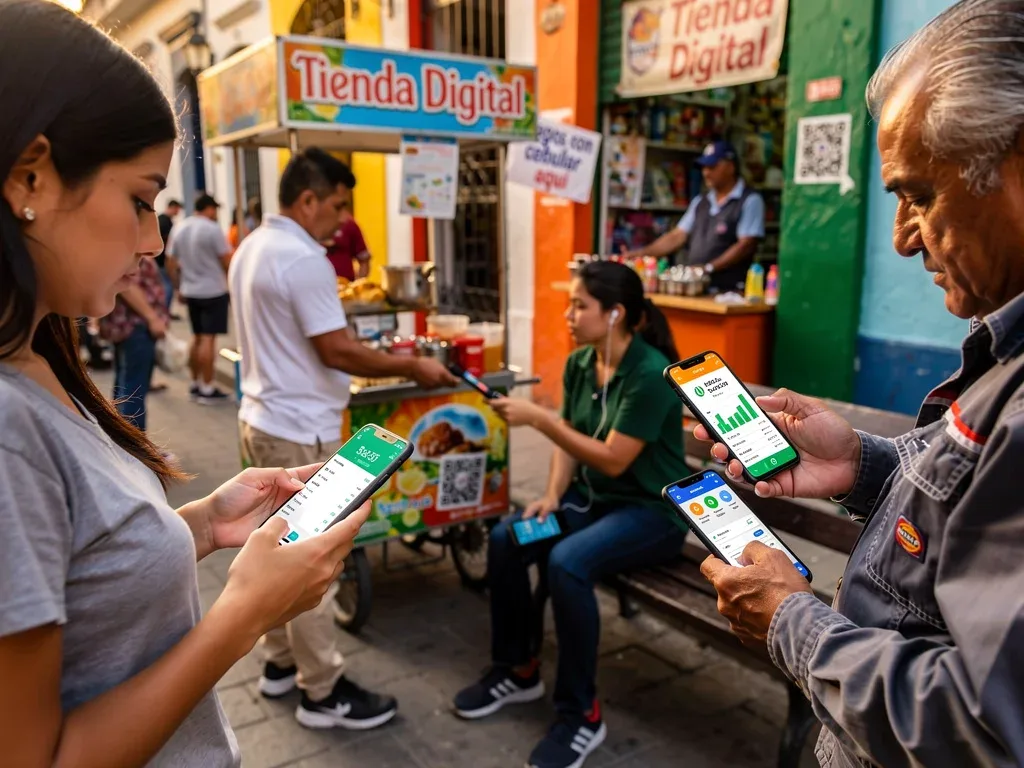
The widespread adoption of these digital tools is transforming daily life for many Mexicans, illustrating the practical benefits of a thriving fintech ecosystem. The continued expansion of these services promises even greater financial integration across the country.
Regulatory Framework and Investor Confidence
A crucial factor contributing to the Rapid Rise of Mexican Fintech is Mexico's progressive regulatory environment. The country was one of the first in Latin America to enact comprehensive fintech legislation, providing clarity and fostering investor confidence.
The Fintech Law, passed in 2018, established a framework for regulating crowdfunding institutions and electronic payment funds institutions (IFPEs), among other entities. This regulatory certainty has attracted significant domestic and international investment, propelling the sector forward.
While regulation aims to protect consumers and prevent illicit activities, it also seeks to foster innovation. This balanced approach has allowed the Mexican fintech landscape to flourish, creating a dynamic ecosystem that is both secure and innovative.
Key Regulatory Milestones and Impact
The implementation of the Fintech Law has been a phased process, with various secondary provisions and guidelines continually being introduced. This iterative approach allows regulators to adapt to new technologies and market developments, ensuring the framework remains relevant and effective.
The National Banking and Securities Commission (CNBV) and the Bank of Mexico play pivotal roles in overseeing the sector, ensuring compliance and stability. Their collaborative efforts have been instrumental in building trust among users and investors.
2018: Enactment of Mexico's Fintech Law.
Ongoing: Issuance of secondary regulations and guidelines.
Focus: Consumer protection, financial stability, and innovation.
Outcome: Increased investor confidence and market growth.
The clear regulatory roadmap has positioned Mexico as an attractive hub for fintech innovation, drawing in startups and established companies alike. This structured environment is a cornerstone of the sector's projected growth.
Key Players and Market Dynamics
The Mexican fintech landscape is characterized by a diverse array of players, from homegrown startups to international giants. This competitive environment fosters innovation and drives down costs, ultimately benefiting consumers.
Digital payment platforms, neo-banks, and lending companies are among the most prominent segments. Companies like Clip, Konfio, and Stori have gained significant traction, demonstrating the vast potential within the market.
Traditional banks are also responding to the fintech challenge, either by developing their own digital offerings or by partnering with fintech firms. This blend of competition and collaboration is accelerating the digital transformation of Mexico’s financial services.
Emerging Trends and Investment Opportunities
Beyond established segments, new trends are emerging, including embedded finance, blockchain applications, and personalized financial advisory services. These areas represent significant future growth opportunities within the Rapid Rise of Mexican Fintech.
Investment in Mexican fintech continues to climb, with venture capital firms actively seeking out promising startups. The sector's resilience and growth potential make it an attractive proposition for both early-stage and institutional investors.
Digital payments and mobile wallets dominate.
Neo-banks are rapidly expanding customer bases.
Lending platforms address credit gaps.
Embedded finance and blockchain are next frontiers.
The dynamism of the market, coupled with a supportive ecosystem, suggests that Mexico will remain a hotbed for fintech innovation and investment for years to come.
Impact on Traditional Banking and Financial Inclusion
The rapid expansion of the fintech sector has inevitably put pressure on traditional banks in Mexico. While some initially viewed fintech as a threat, many now recognize it as an opportunity for collaboration and innovation.
Traditional banks are increasingly investing in their digital capabilities, launching their own mobile apps, and partnering with fintech companies to enhance their service offerings. This convergence is leading to a more integrated and efficient financial system.
Crucially, fintech is significantly advancing financial inclusion by reaching segments of the population that have historically been underserved by traditional banking institutions. This democratic access to financial tools is a game-changer for many.
Bridging the Financial Gap with Digital Solutions
Millions of Mexicans previously excluded from the formal financial system are now able to participate thanks to fintech. Digital wallets, for example, allow individuals to receive remittances, make payments, and save money without needing a traditional bank account.
Micro-lending platforms provide much-needed capital to small businesses and individuals who might not qualify for conventional bank loans. This has a direct positive impact on local economies and entrepreneurial activity.
Traditional banks are adapting through digitization and partnerships.
Fintech services reach underserved populations.
Digital wallets facilitate remittances and payments.
Micro-lending supports small businesses and individuals.
The synergy between traditional finance and fintech is creating a more inclusive and robust financial ecosystem, further propelling the Rapid Rise of Mexican Fintech.
Future Outlook and Challenges for Mexican Fintech
The trajectory for the Rapid Rise of Mexican Fintech appears robust, with continued growth expected across various segments. Innovation in artificial intelligence, machine learning, and big data analytics will further refine and personalize financial services.
However, the sector is not without its challenges. Ensuring robust cybersecurity measures, addressing regulatory complexities, and maintaining consumer trust are ongoing priorities. The competitive landscape also means companies must continually innovate to stay relevant.
The ability of fintech firms to navigate these challenges while continuing to expand their reach will be critical to sustaining the impressive growth rates observed to date. Collaboration between public and private sectors will play a vital role.
Sustaining Growth Amidst Evolving Landscape
As the market matures, the focus will shift from rapid acquisition to sustainable growth and profitability. This involves deepening customer relationships, expanding service offerings, and exploring new markets within Mexico and potentially beyond.
The role of regulatory sandboxes and proactive policy-making will be essential in fostering future innovation while mitigating risks. Mexico's ability to adapt its regulatory framework to emerging technologies will be a key determinant of long-term success.
Continued innovation in AI, ML, and data analytics.
Emphasis on cybersecurity and data privacy.
Navigating evolving regulatory frameworks.
Focus on sustainable growth and profitability.
The future of Mexican fintech is bright, but it requires continuous vigilance and strategic adaptation to maintain its momentum and achieve the projected $110 billion in digital transactions.
Global Implications and Investment Attractiveness
The success of the Rapid Rise of Mexican Fintech has significant global implications, particularly for investors looking at emerging markets. Mexico's experience offers valuable lessons for other countries seeking to develop their own fintech ecosystems.
The combination of a large unbanked population, strong digital adoption trends, and a supportive regulatory environment makes Mexico a highly attractive destination for international investment. This influx of capital further fuels innovation and market expansion.
For global financial institutions, the Mexican market represents both an opportunity for expansion and a testing ground for new digital financial products. The insights gained from Mexico's fintech journey can inform strategies in other developing economies.
Mexico's Role in the Global Fintech Arena
Mexico is increasingly being recognized as a leader in Latin American fintech, with its regulatory model often cited as an example. This leadership position enhances its appeal to global investors and technology companies.
The cross-border nature of many fintech services, especially remittances, further integrates Mexico into the global financial landscape. Innovations in this area are particularly impactful for the large Mexican diaspora.
Mexico as a model for fintech development in emerging markets.
Increased international investment in Mexican fintech.
Testing ground for new digital financial products.
Enhanced global financial integration through cross-border services.
The continued growth of Mexican fintech is not just a domestic story; it's a testament to the transformative power of financial technology on a global scale, showcasing Mexico's increasing prominence in the digital economy.
Key Aspect | Description |
|---|---|
Transaction Volume | Projected over $110 billion by 2026. |
Main Drivers | Unbanked population, digital adoption, regulatory support. |
Regulatory Framework | Progressive Fintech Law enacted in 2018. |
Key Segments | Digital payments, neo-banks, lending platforms. |
Frequently Asked Questions About Mexican Fintech
What is driving the growth of Mexican Fintech?▼
The growth is primarily driven by a large unbanked population, high smartphone penetration, increasing digital literacy, and a robust regulatory framework established by the Fintech Law. The COVID-19 pandemic also accelerated digital adoption, solidifying new financial habits.
How does Mexican Fintech impact financial inclusion?▼
Mexican Fintech significantly boosts financial inclusion by offering accessible and low-cost services like digital wallets, peer-to-peer lending, and simplified payment systems to previously underserved populations. This empowers individuals and small businesses to participate in the formal economy.
What is the role of regulation in this expansion?▼
Mexico's Fintech Law, enacted in 2018, provides a clear and progressive regulatory framework. This legal certainty fosters investor confidence and protects consumers, creating a stable environment for innovation and growth within the sector.
Which segments are leading the Mexican Fintech market?▼
Digital payments, mobile wallets, neo-banks, and lending platforms are currently leading the Mexican Fintech market. Emerging areas like embedded finance and blockchain applications are also gaining traction and represent future growth opportunities.
What challenges does Mexican Fintech face moving forward?▼
Key challenges include ensuring robust cybersecurity, adapting to evolving regulatory complexities, maintaining consumer trust, and fostering sustainable profitability amidst intense competition. Continuous innovation and strategic adaptation will be crucial for long-term success.
Looking Ahead: The Future Trajectory of Mexican Fintech
The impressive trajectory of the Rapid Rise of Mexican Fintech signals a profound shift in Mexico's financial landscape. This growth is not just a temporary trend but a foundational change driven by increasing digital literacy, supportive regulation, and a strong market need.
Stakeholders should monitor ongoing regulatory developments, investment patterns, and the emergence of new technologies. The continued integration of fintech into daily life will redefine financial services, offering both opportunities and challenges for consumers, businesses, and investors in the coming years.