Mexico’s Energy Policy Shifts 2026: 4 Sectors Impacted Now
Advertisements

Is your business prepared to adapt to Mexico’s new rules of state control, or will the tightening grid structure catch you off guard? The recently formalized Mexico’s Energy Policy Shifts are completely rewriting the rules of engagement for private capital and national infrastructure.
Under the current administration, the strategic balance has flipped to guarantee public dominance over the national grid while introducing strict caps on independent clean energy projects.
This major structural pivot forces multinational firms and local operators to aggressively overhaul their compliance and operational strategies.
As state-owned utilities implement new mixed-contract guidelines and centralized regulatory frameworks this quarter, the commercial stakes have never been higher. This strategic briefing untangles the localized market realities across four critical sectors to protect your corporate footprint.
Understanding Mexico’s Energy Policy Framework for 2026
As 2026 approaches, Mexico’s energy policy framework is undergoing significant recalibration, driven by both domestic priorities and international commitments. The federal government has signaled a clear intent to strengthen state control while selectively fostering private sector participation.
These policy adjustments are designed to ensure energy sovereignty and stability, particularly in the electricity and hydrocarbon sectors. However, they also introduce new complexities for foreign and local investors operating within the Mexican energy market.
The overarching goal appears to be a more integrated and self-sufficient energy system, balancing traditional fossil fuel production with an increasing, albeit controlled, push towards renewable energy sources.
Key Legislative and Regulatory Changes Expected
Several legislative initiatives and regulatory amendments are currently under review or slated for implementation, directly impacting how energy projects are developed and operated. These include modifications to existing energy laws and new decrees affecting permitting and concessions.
The proposed changes aim to streamline approval processes for state-owned enterprises (SOEs) like Pemex and CFE, potentially at the expense of private sector agility. This could lead to a less competitive environment in certain segments of the market.
Stakeholders should closely monitor these legislative developments as they unfold throughout late 2024 and 2025, providing early indicators of the operational landscape in 2026 for Mexico Energy Policy 2026.
- Proposed amendments to the Electricity Industry Law for increased CFE dispatch priority.
- New regulations impacting crude oil and natural gas exploration and production contracts.
- Streamlined permitting for state-led renewable energy projects.
Impact on the Oil and Gas Sector
The oil and gas sector in Mexico is particularly sensitive to government policy, and 2026 is expected to bring substantial shifts. The focus remains on strengthening Pemex’s role, with increased investment in upstream activities and refinery modernization.
Private companies operating in exploration and production (E&P) and midstream segments face a more challenging regulatory environment. Existing contracts may be subject to review, and new opportunities could become more limited or come with stricter conditions.
The government’s strategy emphasizes domestic refining capacity and energy self-sufficiency, potentially reducing reliance on imported fuels. This could reshape supply chains and market dynamics for refined products.
Pemex’s Enhanced Role and Private Sector Challenges
Pemex is expected to receive significant federal backing, enabling it to expand its operational footprint and production targets. This includes continued investment in key producing fields and the Dos Bocas refinery, which aims to reduce gasoline and diesel imports.
For private oil and gas companies, securing new licenses or expanding existing operations may become more complex. The emphasis on national content and state control could lead to higher compliance costs and reduced profitability.
Market analysts project a period of consolidation and strategic re-evaluation for private players. Adapting to the new policy landscape will be crucial for long-term viability within the context of Mexico Energy Policy 2026.
- Increased capital allocation for Pemex’s upstream and downstream projects.
- Stricter environmental and social impact assessments for private concessions.
- Potential for renegotiation or review of existing service and production contracts.
Transformation in the Electricity Sector
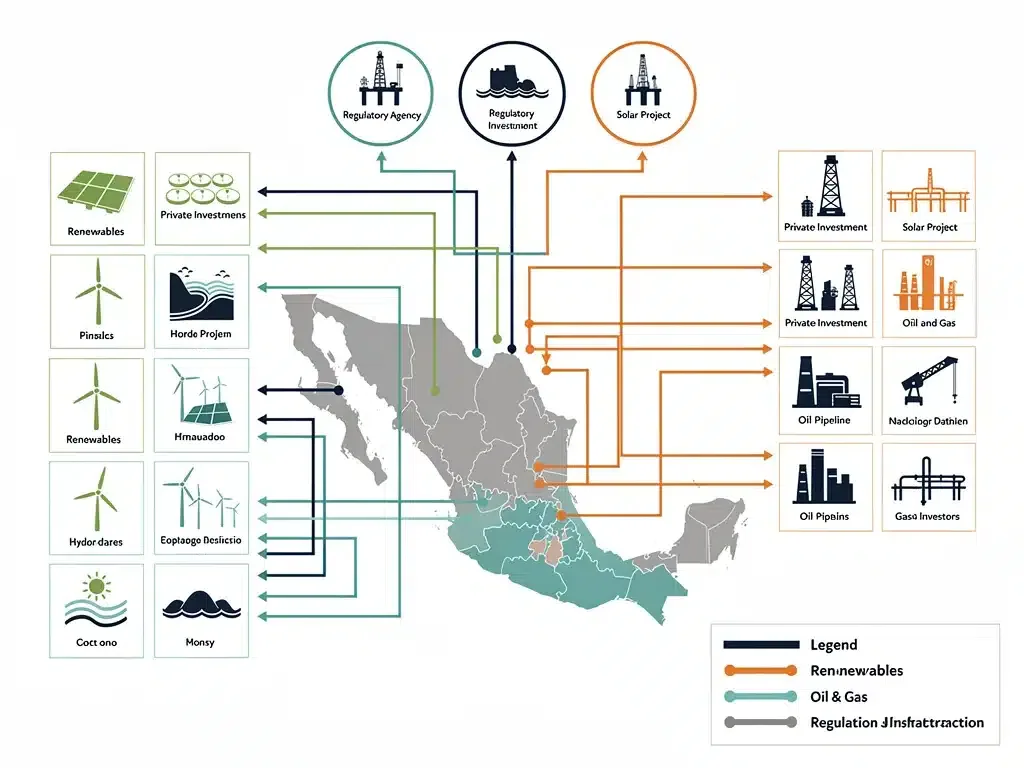
The electricity sector is another area poised for significant transformation under Mexico’s Energy Policy Shifts. The government’s strategy prioritizes the Federal Electricity Commission (CFE), aiming to restore its dominance in generation, transmission, and distribution.
This involves increasing CFE’s generation capacity, particularly through thermal plants, and granting it preferential dispatch status over private renewable energy generators. Such measures could alter the competitive landscape and impact electricity prices.
Private renewable energy projects, while still encouraged in principle, may face hurdles in grid integration and commercialization. The focus shifts towards ensuring grid stability and affordability, often at the expense of market liberalization.
CFE’s Dominance and Renewable Energy Integration
The CFE’s reinforced position means it will play a more central role in meeting Mexico’s growing electricity demand. Investments in new power plants and grid infrastructure are anticipated, further solidifying its control over the national electricity system.
For private renewable energy developers, navigating the CFE-centric environment will require strategic partnerships and a deep understanding of evolving regulatory frameworks. Project financing and power purchase agreements might also see new conditions.
The challenge lies in balancing the government’s energy sovereignty goals with the urgent need for decarbonization and sustainable development. The future of renewable energy in Mexico hinges on these policy interactions for Mexico Energy Policy 2026.
- Preferential dispatch for CFE-owned power plants, including fossil fuel-based ones.
- Revisions to transmission and distribution fees impacting private generators.
- Emphasis on large-scale, state-led renewable projects over smaller, private initiatives.
Emerging Opportunities in Renewable Energy
Despite the challenges, Mexico’s Energy Policy Shifts also present unique opportunities within the renewable energy sector, especially for technologies that align with national strategic priorities. Solar and wind power continue to be attractive, albeit under new operational parameters.
The government’s commitment to reducing emissions, albeit through a state-led approach, still necessitates significant investment in clean energy. This opens avenues for technology providers, equipment manufacturers, and developers willing to adapt to the new framework.
Furthermore, emerging technologies like green hydrogen and energy storage solutions could gain traction, particularly if they can demonstrate significant contributions to grid stability and energy independence. This is a critical aspect of Mexico Energy Policy 2026.
Strategic Niches and Local Content Development
Focusing on strategic niches, such as distributed generation for industrial self-supply or projects in less-served regions, might offer more stable growth. These areas could be less impacted by the broader regulatory shifts affecting utility-scale projects.
There is also a growing emphasis on local content and manufacturing within the renewable energy supply chain. Companies that can demonstrate a commitment to local production and job creation may find more favorable conditions.
Collaboration with Mexican research institutions and state-owned entities could also unlock new pathways for project development and market entry. These partnerships are becoming increasingly vital in the evolving energy landscape.
- Increased demand for energy storage solutions to support grid stability.
- Government incentives for green hydrogen pilot projects and infrastructure.
- Opportunities in rural electrification and off-grid renewable solutions.
The Automotive Sector and Energy Transition
The automotive sector, particularly the electric vehicle (EV) segment, is intrinsically linked to Mexico’s Energy Policy Shifts. As global trends push towards electrification, Mexico aims to position itself as a key manufacturing hub for EVs and their components.
However, the success of this transition heavily relies on a robust and reliable electricity grid, as well as the availability of charging infrastructure. Energy policy decisions will directly influence the pace and scale of EV adoption and production within the country.
Government policies around battery manufacturing, raw material sourcing, and public charging networks will be critical determinants for the automotive sector’s growth. This presents a complex interplay between industrial policy and energy strategy.
EV Manufacturing and Charging Infrastructure Development
Mexico’s strategic location and existing automotive manufacturing infrastructure make it an attractive destination for EV production. Policy support for battery gigafactories and component suppliers could further solidify this position.
The development of a widespread and efficient charging infrastructure is paramount. This requires collaboration between the CFE, private investors, and municipalities to deploy charging stations across urban and intercity routes.
Incentives for consumers to adopt EVs, such as tax breaks or subsidies, could also play a significant role in stimulating demand and accelerating the energy transition within the automotive sector. This is a key aspect of Mexico Energy Policy 2026.
- Government initiatives to attract investment in EV battery production.
- Expanded public-private partnerships for charging network deployment.
- Fiscal incentives for both EV manufacturers and consumers.

Mining Sector’s Role in the Energy Transition
The mining sector’s importance in Mexico’s Energy Policy Shifts cannot be overstated, particularly concerning critical minerals essential for renewable energy technologies and EV batteries. Mexico possesses significant reserves of lithium, copper, and graphite.
Government policy aims to leverage these resources to support the energy transition, potentially through increased state control over strategic mineral extraction. This could involve nationalization efforts or stricter regulations for private mining companies.
The interplay between mining policy and energy policy will define Mexico’s ability to become a self-sufficient player in the global clean energy supply chain. Companies in this sector must closely monitor legislative changes and investment priorities.
Critical Minerals and Supply Chain Security
The global demand for critical minerals is surging, making Mexico’s reserves highly valuable. Policies that promote responsible and sustainable mining practices, while ensuring national benefit, will be key to unlocking this potential.
Ensuring supply chain security for these minerals is a strategic imperative for both domestic industries and international partners. Mexico’s approach to lithium, for instance, will have significant implications for the global EV battery market.
Collaboration between mining companies, technology developers, and government agencies will be essential to establish robust and ethical supply chains for the minerals vital to the energy transition. This is a crucial element of Mexico Energy Policy 2026.
- Potential for increased state participation or nationalization in critical mineral extraction.
- New environmental and social regulations for mining operations.
- Government support for research and development in mineral processing technologies.
Strategic Implications for International Investors
For international investors, Mexico’s Energy Policy Shifts present a complex but not insurmountable landscape. Understanding the government’s priorities and adapting investment strategies accordingly will be paramount for success.
While the emphasis on state control may deter some, opportunities still exist for those willing to engage in partnerships, demonstrate long-term commitment, and align with national development goals. Due diligence and risk assessment become more critical than ever.
Maintaining open lines of communication with government agencies and local stakeholders will be essential for navigating the evolving regulatory environment and identifying viable investment avenues in Mexico Energy Policy 2026.
Navigating Regulatory Frameworks and Partnership Opportunities
International firms must thoroughly analyze the updated legal and regulatory frameworks to ensure compliance and mitigate potential legal risks. Expert legal counsel specializing in Mexican energy law will be invaluable.
Exploring joint ventures or strategic alliances with state-owned enterprises or local Mexican companies could provide a pathway to market entry and project development. These partnerships can help bridge the gap between private capital and government objectives.
Focusing on projects that offer clear benefits to local communities and contribute to Mexico’s broader energy security and sustainability goals may also find more favorable government support and reduced regulatory friction.
- Increased importance of local content requirements and technology transfer.
- Potential for arbitration or dispute resolution mechanisms to be tested.
- Emphasis on projects that contribute to energy efficiency and grid modernization.
| Key Policy Area | Brief Description of Shift |
|---|---|
| Oil & Gas Sector | Enhanced Pemex role, stricter private sector regulations. |
| Electricity Market | CFE dominance, challenges for private renewable integration. |
| Renewable Energy | Strategic niches, focus on local content and state-led projects. |
| Automotive/EVs | Push for EV manufacturing, critical need for charging infrastructure. |
Frequently Asked Questions on Mexico’s Energy Policy Shifts
What are the primary drivers behind Mexico’s Energy Policy Shifts in 2026?▼The primary drivers are Mexico’s pursuit of energy sovereignty, reducing reliance on foreign energy imports, and strengthening state-owned enterprises (Pemex and CFE). These goals aim to ensure stability, affordability, and national control over strategic energy resources.
How will these shifts impact private investment in the energy sector?▼Private investment may face increased regulatory scrutiny and a more competitive environment, especially in areas where state-owned entities are prioritized. Opportunities will likely favor strategic partnerships and projects aligning with national energy goals, impacting Mexico Energy Policy 2026.
Are there specific sectors that will benefit from these policy changes?▼Sectors closely aligned with Pemex and CFE’s operational expansions, such as oil and gas services for Pemex, and power generation or grid infrastructure for CFE, may see benefits. Also, strategic niches in renewables and critical mineral mining could find opportunities.
What role will renewable energy play under the new policies?▼Renewable energy will continue to be developed, but with a stronger emphasis on state-led projects and ensuring grid stability through CFE. Private renewable projects may need to adapt to new dispatch rules and seek strategic partnerships, which is a key part of Mexico’s Energy Policy Shifts in 2026: What 4 Sectors Need to Know Now.
What should businesses do to prepare for these upcoming changes?▼Businesses should conduct thorough regulatory reviews, evaluate potential impacts on existing contracts, and explore partnership opportunities with state entities. Diversifying portfolios and focusing on local content initiatives can also help in adapting to Mexico Energy Policy 2026.
Looking Ahead: Navigating Mexico’s Evolving Energy Landscape
The forthcoming Mexico’s Energy Policy Shifts signal a clear direction towards greater state control and energy self-sufficiency. Stakeholders across the oil and gas, electricity, renewable energy, and automotive sectors must remain vigilant.
Monitoring legislative developments, understanding the nuances of regulatory changes, and engaging in strategic partnerships will be critical for navigating this evolving landscape successfully.
The shifts are designed to reshape Mexico’s energy future, demanding proactive adaptation from all market participants.
The long-term implications of these policies will determine not only Mexico’s energy security but also its position in the global energy transition.
Staying informed and agile will be key to thriving amidst these significant transformations in Mexico Energy Policy 2026.