Banxico's Rate Cut: Impacts on Trade and Mexican Peso
Advertisements
Banxico's Rate Cut sent immediate shockwaves across Latin America’s financial landscape, setting off a crucial shift in regional monetary policy. This strategic decision by the central bank directly recalibrates the economic momentum, influencing borrowing costs and market expectations.
As foreign exchange markets adjust to lower policy yields, the Mexican Peso faces fresh valuation pressures against major trading currencies. Investors are watching closely as these reduced borrowing benchmarks alter currency strength and international capital movements.
Beyond currency fluctuations, the broader monetary easing cycle directly reshapes cross-border commerce dynamics with key global partners. Here is a clear breakdown of how adjusted benchmark interest rates impact commercial trade flows, corporate supply chains, and market stability.
Understanding Banxico's Monetary Policy Shift
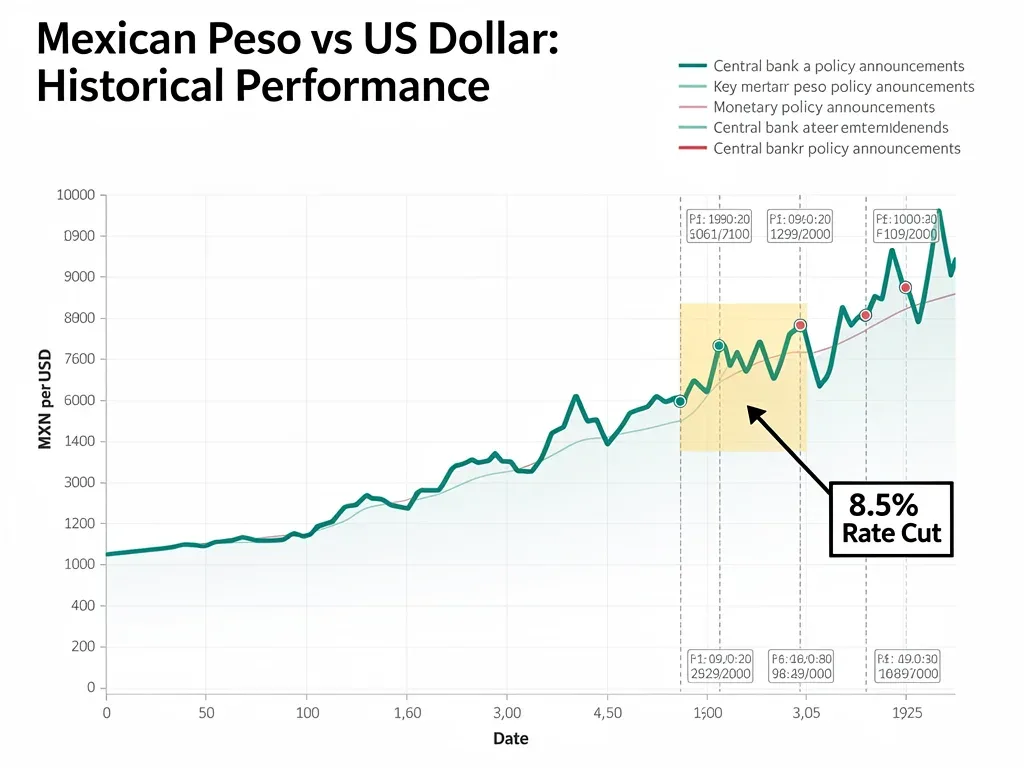
Banxico's decision to lower the interest rate to 8.5% signals a cautious but deliberate shift in its monetary policy stance. This move comes after a period of sustained high rates aimed at curbing persistent inflation, reflecting a new assessment of economic conditions and future outlook.
The central bank's communication emphasized a balance between anchoring inflation expectations and supporting economic activity. This delicate act is critical for maintaining stability while fostering an environment conducive to growth, especially in a dynamic global economy.
Analysts are scrutinizing the underlying data that informed this decision, including recent inflation figures, employment trends, and global economic indicators. The rate cut is expected to influence borrowing costs across the Mexican economy, from consumer loans to corporate investments.
The Rationale Behind the Rate Cut
Banxico's governing board cited a moderation in inflationary pressures and a more favorable outlook for price stability as key factors. This assessment suggests that previous tightening cycles have had their intended effect, creating space for a more accommodative policy.
Another significant consideration was the need to stimulate economic growth, which has shown signs of slowing. Lower interest rates typically encourage greater investment and consumption, providing a boost to domestic demand and overall economic expansion.
Furthermore, global economic conditions, including potential rate cuts by other major central banks, likely played a role in Banxico's decision-making. Synchronized policy adjustments can help mitigate currency volatility and maintain competitiveness in international markets, which is crucial for Banxico's Latest Interest Rate Cut.
Immediate Effects on the Mexican Peso
The announcement of Banxico's Latest Interest Rate Cut immediately sent ripples through foreign exchange markets. The Mexican Peso, often sensitive to interest rate differentials, experienced notable fluctuations in its value against major currencies, particularly the US Dollar.
Typically, a rate cut can lead to a depreciation of the local currency as it reduces the attractiveness of holding assets denominated in that currency. Investors might seek higher yields elsewhere, leading to capital outflows and downward pressure on the Peso.
However, the actual impact can be multifaceted, influenced by market expectations, global risk sentiment, and the relative strength of other economies. Understanding these dynamics is essential for businesses engaged in international transactions and for hedging currency risks.
Peso Volatility and Investor Sentiment
Initial market reactions often involve increased volatility as traders adjust their positions based on the new interest rate environment.
Investor sentiment plays a crucial role; if the rate cut is perceived as a sign of economic weakness, it could exacerbate depreciation.
Conversely, if the cut is seen as a well-timed move to stimulate growth without compromising inflation control, the Peso might stabilize or even strengthen in the medium term.
The long-term trajectory of the Mexican Peso will depend on a combination of Banxico's future policy decisions, Mexico's economic performance, and broader global economic trends. Close monitoring of these factors is vital for anyone exposed to Peso exchange rate fluctuations.
Implications for Cross-Border Trade with the US
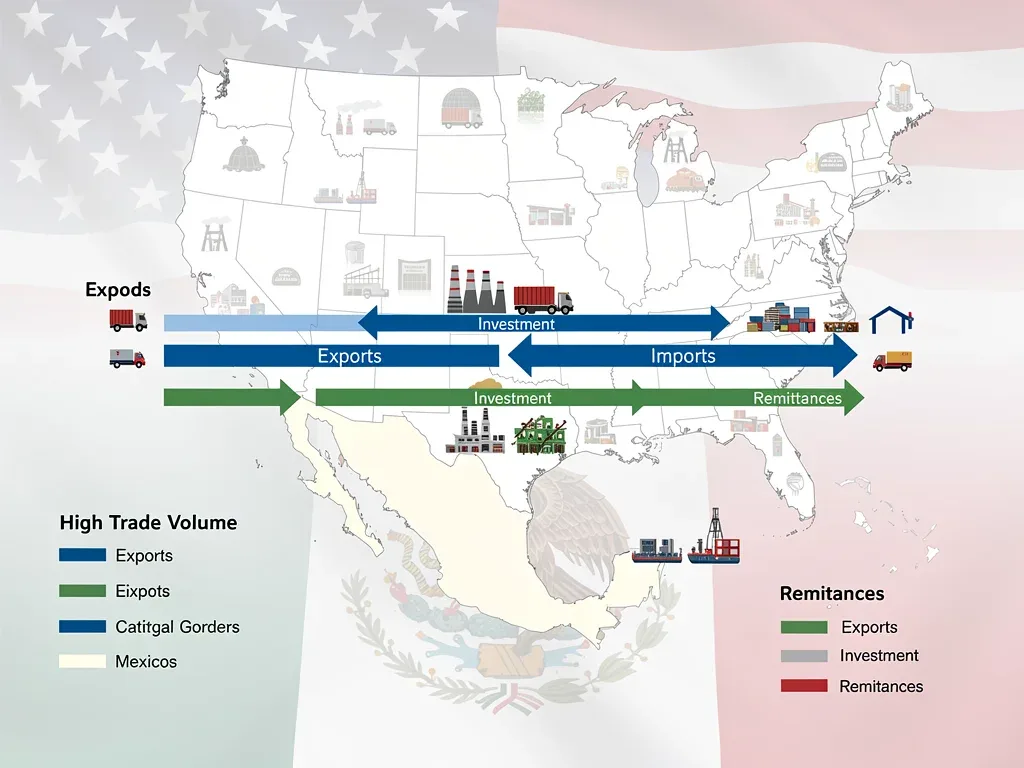
Cross-border trade between Mexico and the United States is a cornerstone of both economies, and Banxico's Latest Interest Rate Cut introduces new variables into this complex relationship. A weaker Mexican Peso can make Mexican exports more competitive in the US market, potentially boosting trade volumes.
Conversely, a depreciated Peso makes imports from the US more expensive for Mexican consumers and businesses. This could lead to shifts in purchasing patterns, favoring domestically produced goods or impacting supply chains reliant on US inputs.
For US companies operating in Mexico or sourcing from Mexican suppliers, currency fluctuations directly affect their cost structures and profitability. Strategic planning and hedging strategies become even more critical in this evolving environment.
Export Competitiveness and Import Costs
A more competitive Peso can provide a significant advantage for Mexican exporters, making their products more attractive to international buyers. Industries such as automotive, electronics, and agriculture, which are heavily involved in US-Mexico trade, could see increased demand.
However, the rising cost of imports due to a weaker Peso could pressure Mexican manufacturers who rely on imported components. This might lead to higher production costs, which could then be passed on to consumers or erode profit margins, impacting the overall trade balance and the broader implications of Banxico's Latest Interest Rate Cut.
The net effect on cross-border trade will be a delicate balance between these opposing forces. Businesses must analyze their specific supply chains and market demand to navigate these changes effectively, considering the full scope of Banxico's Latest Interest Rate Cut.
Impact on Foreign Direct Investment (FDI)
Foreign Direct Investment (FDI) into Mexico is another area significantly influenced by interest rate decisions and currency movements. Banxico's Latest Interest Rate Cut can alter the attractiveness of Mexico as an investment destination for foreign capital.
Lower interest rates can reduce the cost of borrowing for businesses looking to invest in Mexico, making new projects more financially viable. This could encourage an influx of FDI, particularly in sectors targeted for growth or those with strong export potential.
However, a depreciating Peso can also make initial investments cheaper in foreign currency terms, but it can also raise concerns about the repatriation of profits. Investors weigh these factors carefully when making long-term investment decisions in the Mexican market.
Investment Climate and Capital Flows
Reduced borrowing costs within Mexico can stimulate domestic and foreign investment in infrastructure, manufacturing, and services.
The perceived stability of the Mexican Peso and the overall economic outlook will heavily influence investor confidence and capital inflows.
Policies aimed at facilitating business and reducing regulatory hurdles will be crucial in leveraging the potential benefits of lower interest rates to attract more FDI.
The interplay between interest rates, currency value, and investor confidence is complex. Banxico's policy aims to strike a balance that supports both domestic economic activity and external investment, which are vital components of Banxico's Latest Interest Rate Cut.
Sector-Specific Economic Repercussions
The repercussions of Banxico's Latest Interest Rate Cut will not be uniform across all sectors of the Mexican economy. Some industries are likely to experience more pronounced effects than others, depending on their reliance on borrowing, international trade, and consumer spending patterns.
The manufacturing sector, particularly those involved in export-oriented production, could see benefits from a more competitive Peso. Lower interest rates might also encourage expansion and modernization within these industries, supporting job creation.
Conversely, sectors heavily reliant on imported raw materials or machinery might face increased costs, potentially impacting their profitability and operational efficiency. The tourism sector, however, could benefit from a weaker Peso, making Mexico a more affordable destination for foreign visitors.
Winners and Losers in the New Rate Environment
Exporters in industries like automotive, aerospace, and agricultural products are poised to gain from enhanced price competitiveness in international markets. This can lead to increased sales and production volumes, bolstering these key economic drivers.
Importers and industries with significant foreign debt denominated in stronger currencies might face challenges. The higher cost of servicing debt and acquiring imported goods could squeeze margins and necessitate strategic adjustments, directly linked to the consequences of Banxico's Latest Interest Rate Cut.
Domestic consumption, supported by potentially lower loan rates for consumers, could see a boost in sectors like retail and services. Real estate might also experience renewed interest as mortgage rates become more attractive, illustrating the broad reach of Banxico's Latest Interest Rate Cut.
Navigating the Future: Business Strategies and Outlook
In light of Banxico's Latest Interest Rate Cut, businesses operating in or with Mexico must reassess their strategies. Proactive measures can help mitigate risks and capitalize on new opportunities arising from the altered economic landscape.
For companies engaged in cross-border trade, this includes re-evaluating pricing strategies, supply chain resilience, and currency risk management. Hedging against Peso volatility becomes a more pressing concern to protect profit margins and ensure financial stability.
Investment decisions, both domestic and foreign, will also need careful consideration of the new interest rate environment. Lower borrowing costs could unlock new projects, while currency fluctuations will influence the perceived value and returns of these investments.
Strategic Adjustments for Businesses
Re-evaluate existing contracts and payment terms to account for potential currency fluctuations and their impact on profitability.
Explore opportunities for local sourcing within Mexico to mitigate the increased cost of imports, strengthening domestic supply chains.
Consider implementing or enhancing currency hedging strategies to protect against adverse movements in the Mexican Peso, a direct consequence of Banxico's Latest Interest Rate Cut.
The economic outlook for Mexico, while influenced by this rate cut, also depends on global economic stability and domestic policy consistency. Businesses that adapt swiftly and strategically will be better positioned to thrive in this evolving environment, understanding the full scope of Banxico's Latest Interest Rate Cut.
Potential Risks and Challenges Ahead
While Banxico's Latest Interest Rate Cut aims to stimulate growth, it also introduces potential risks and challenges that require careful monitoring. One primary concern is the potential for renewed inflationary pressures if the economy overheats too quickly.
Another risk relates to the stability of the Mexican Peso. While some depreciation can benefit exports, excessive volatility or a significant weakening of the currency could undermine investor confidence and increase the cost of foreign-denominated debt for Mexican entities.
Global economic uncertainties, including geopolitical tensions and commodity price fluctuations, further complicate the outlook. These external factors can amplify or mitigate the domestic effects of Banxico's monetary policy decisions, adding layers of complexity to Banxico's Latest Interest Rate Cut.
Inflationary Pressures and Currency Stability
Banxico will need to closely monitor inflation indicators to ensure that the rate cut does not lead to an undesirable resurgence of price increases. A premature easing of monetary policy could undo previous efforts to bring inflation under control.
Maintaining confidence in the Mexican Peso is crucial. A stable currency attracts foreign investment and helps keep import costs manageable. Banxico's future communications and actions will be vital in guiding market expectations and preventing excessive currency depreciation.
The interplay between domestic policy and global economic forces means that vigilance will be key. Businesses and policymakers must remain agile, ready to respond to unforeseen challenges that could arise from Banxico's Latest Interest Rate Cut.
Regional Economic Disparities and the Rate Cut
The effects of Banxico's Latest Interest Rate Cut are likely to manifest differently across Mexico's diverse regions. Economic disparities mean that some areas may benefit more directly, while others might face unique challenges from the policy shift.
Northern states, with their strong ties to manufacturing and export industries linked to the US, could see an uplift in economic activity due to increased export competitiveness. The flow of goods and services across the border is a major economic driver in these regions.
Conversely, regions more reliant on domestic consumption or facing specific local economic challenges might experience a more muted or even negative impact. Understanding these regional nuances is crucial for a comprehensive assessment of the rate cut's overall effect.
Localized Economic Responses
States heavily involved in industries like automotive assembly and electronics manufacturing, benefiting from a weaker Peso, could see increased production and employment. This directly relates to the broad implications of Banxico's Latest Interest Rate Cut.
Regions that are net importers of goods or components might experience higher costs, impacting local businesses and consumer prices. This could lead to localized inflationary pressures or reduced purchasing power for residents.
The tourism-dependent regions, particularly coastal areas and cultural centers, could see a boost as a weaker Peso makes Mexico a more attractive and affordable destination for international travelers, further illustrating the varied impacts of Banxico's Latest Interest Rate Cut.
Key Policy Area | Brief Impact Description |
|---|---|
Mexican Peso | Potential depreciation, affecting import costs and export competitiveness. |
Cross-Border Trade | Boosts Mexican exports, increases cost of US imports. |
FDI & Investment | Lower borrowing costs may attract FDI, but currency risk is a factor. |
Economic Growth | Stimulus for domestic consumption and investment, balancing inflation control. |
Frequently Asked Questions About Banxico's Rate Cut
Why did Banxico cut interest rates to 8.5%?▼
Banxico cut rates due to moderating inflation and a desire to stimulate economic growth. The central bank assessed that previous tightening had sufficiently curbed price pressures, allowing for a more accommodative stance to support investment and consumption in the economy.
How will the rate cut affect the Mexican Peso?▼
A rate cut typically leads to a weaker Mexican Peso as it reduces the currency's attractiveness for yield-seeking investors. This can make Mexican exports cheaper and imports more expensive, influencing trade balances and financial flows.
What are the implications for cross-border trade with the US?▼
The rate cut could boost Mexican exports to the US by making them more competitive. Conversely, US goods imported into Mexico will become more expensive, potentially shifting consumer and business purchasing towards domestic alternatives.
Will this attract more foreign direct investment to Mexico?▼
Lower interest rates can reduce borrowing costs for investors, potentially making Mexico a more attractive destination for FDI. However, currency volatility associated with the rate cut could also introduce an element of risk for foreign capital.
What risks are associated with Banxico's rate cut?▼
Key risks include a potential resurgence of inflation if the economy grows too rapidly, and excessive depreciation of the Mexican Peso. Global economic uncertainties could also amplify or alter the intended effects of the domestic monetary policy.
Looking Ahead: Navigating the New Economic Landscape
The recent decision by Banxico to implement Banxico's Latest Interest Rate Cut sets a new course for Mexico's economic trajectory. Stakeholders must remain vigilant, closely monitoring inflation data, Peso exchange rate movements, and global economic indicators.
The effects on cross-border trade and investment will unfold over time, requiring adaptive strategies from businesses and careful policy calibration from the central bank to ensure sustained growth and stability.