Mexico's 2026 Energy Policy Shifts: U.S. Business Guide
Advertisements
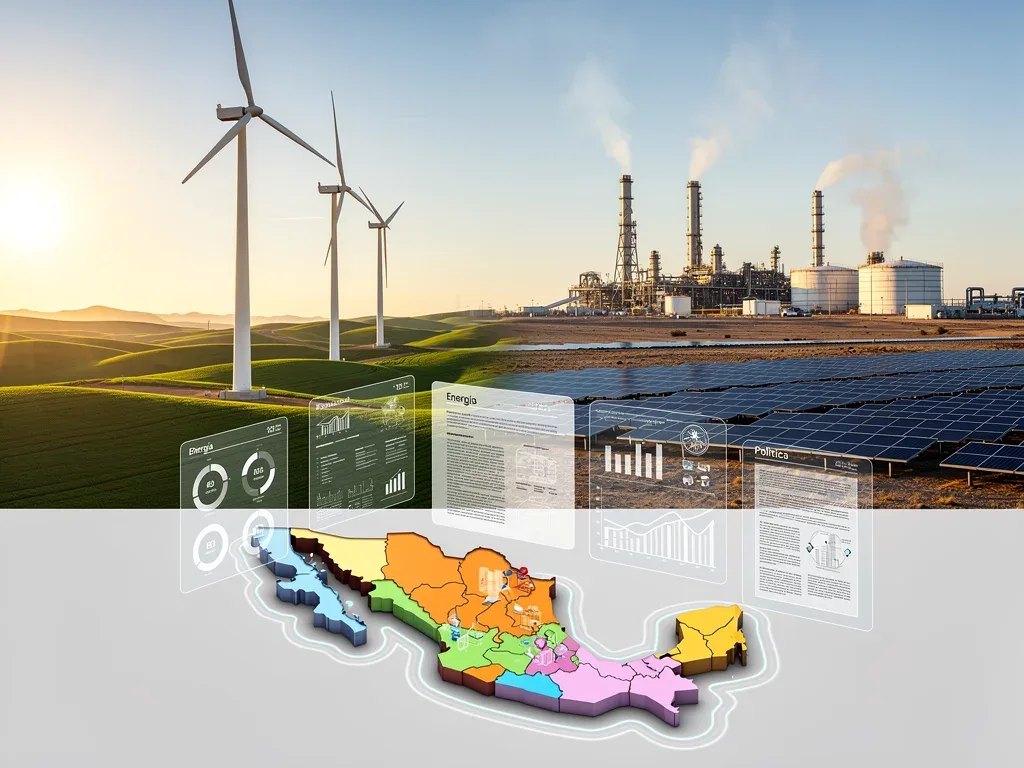
Navigating state-driven market restructurings and new regulatory frameworks across Latin America requires adaptive cross-border investment strategies.
Staying ahead of Mexico's 2026 Energy Policy Shifts enables American enterprises to protect existing assets while identifying new legal pathways in the country's evolving power grid.
As state utilities reclaim dominant generation quotas, foreign investors are pivoting toward mixed-investment models and localized clean energy partnerships. Adapting to centralized oversight ensures regulatory compliance while opening up high-capacity industrial opportunities along key manufacturing corridors.
Want to safeguard your regional supply chains and capitalize on emerging grid opportunities? Here is how U.S. businesses can successfully align with updated cross-border energy guidelines in 2026.
Understanding Mexico's Evolving Energy Landscape
Mexico's energy sector is undergoing significant transformations as the country approaches 2026, driven by a blend of nationalistic energy sovereignty goals and international climate commitments. These shifts present both challenges and opportunities for foreign investors, particularly those from the United States.
Recent policy adjustments emphasize strengthening state-owned enterprises, Petróleos Mexicanos (Pemex) and Comisión Federal de Electricidad (CFE), while navigating a complex regulatory environment. U.S. businesses must understand these nuances to effectively operate and invest within this dynamic market.
The direction of Mexico's energy policy shifts is not static, with ongoing discussions and potential legislative changes continually influencing the operational framework for private sector participation. Keeping abreast of these developments is paramount for strategic planning.
Key Policy Updates Impacting U.S. Businesses
Recent legislative and regulatory changes have solidified the Mexican government's commitment to prioritizing state control over energy resources. These updates directly influence market access, operational permits, and the overall competitiveness for private, especially U.S., energy companies.
Amendments to the Electricity Industry Law, for example, favor dispatch from CFE-owned plants, potentially marginalizing private renewable energy generators. This has generated concern among U.S. investors who have significant stakes in wind and solar projects.
Furthermore, new administrative hurdles and permit delays have been reported, creating an environment of uncertainty that demands careful navigation from U.S. businesses. Understanding these specific policy updates is critical for evaluating risk and opportunity.
Strengthening State-Owned Enterprises
The current administration has consistently advocated for a more dominant role for Pemex in oil and gas and CFE in electricity generation and transmission. This focus aims to restore national energy sovereignty and reduce reliance on foreign entities.
This strategy often translates into preferential treatment for state companies in dispatch order, project approvals, and even fuel supply contracts. U.S. businesses need to assess how this preferential treatment impacts their competitive standing and potential for growth within Mexico's energy sector.
Such policies have led to increased investment in existing state infrastructure and a push for greater domestic refining capacity, which has implications for U.S. refined product exports to Mexico.
Regulatory Framework and Permitting Challenges
The regulatory landscape for private energy projects in Mexico has become more complex, with increased scrutiny and slower processing times for permits. This has been a significant point of contention for U.S. companies.
Permit applications for new power generation facilities face extended review periods.
Existing permits for renewable energy projects have, in some cases, been challenged or revoked.
Environmental impact assessments are undergoing stricter reviews, adding layers of bureaucracy.
These challenges create significant barriers to entry and expansion for U.S. businesses, necessitating robust legal and regulatory compliance strategies. Navigating this environment requires deep local expertise and persistent engagement with Mexican authorities.
Investment Opportunities Amidst Policy Shifts
Despite the challenges, Mexico's energy sector still presents compelling investment opportunities for U.S. businesses, particularly in areas aligned with government priorities or niche markets. The growing demand for energy and the push for modernization create openings.
Opportunities exist in sectors that complement state-owned enterprises, such as energy efficiency technologies, smart grid solutions, and specialized services for infrastructure development. Strategic partnerships can also unlock new avenues.
Furthermore, the nearshoring trend is driving increased industrial demand for reliable and sustainable energy, creating a market for advanced energy solutions. U.S. businesses can leverage their technological expertise in these areas.
Strategic Partnerships and Niche Markets
Forming strategic alliances with Mexican entities, including state-owned companies or local private firms, can be a crucial strategy for U.S. businesses. These partnerships can facilitate market entry and navigate regulatory complexities.
Niche markets, such as distributed generation for industrial consumers or specialized energy storage solutions, also offer fertile ground. These areas may face less direct competition from state enterprises and cater to specific industrial needs.
Focusing on high-value, technology-driven solutions that enhance efficiency or reduce environmental impact can position U.S. companies favorably. Mexico's energy policy shifts do not entirely negate the need for innovation.
Renewable Energy: A Shifting Landscape
While the broader renewable energy sector has faced headwinds, specific segments still hold promise. Corporate power purchase agreements (PPAs) with large industrial consumers, for instance, remain a viable path for renewable energy developers.
The demand for clean energy from multinational corporations operating in Mexico, driven by their own sustainability goals, continues to fuel interest in private renewable projects. U.S. businesses can cater to this demand.
Moreover, advancements in hybrid energy systems and energy storage solutions could offer innovative approaches to integrate renewables into Mexico's grid, aligning with long-term energy security goals. Mexico's energy policy shifts are evolving.
Implications for U.S. Energy Exporters and Importers
Mexico's energy policy shifts have direct consequences for cross-border energy trade, affecting U.S. exporters of natural gas, refined products, and electricity, as well as importers of Mexican crude oil. These trade dynamics are constantly evolving.
Changes in Mexican domestic energy production and consumption patterns can alter demand for U.S. energy commodities. For example, increased domestic refining capacity could reduce demand for U.S. gasoline exports.
Conversely, Mexico's reliance on U.S. natural gas for power generation remains significant, creating a stable, though potentially evolving, market for U.S. producers. Understanding these implications is vital for U.S. businesses.
Natural Gas and Refined Products Trade
The U.S. remains Mexico's primary supplier of natural gas, a critical fuel for power generation and industrial processes. While Mexico aims for greater energy independence, its existing infrastructure and demand make this reliance persistent.
However, Mexico's push to increase its own refining capacity, particularly through projects like Dos Bocas, could gradually reduce its dependence on U.S. refined product imports. This requires U.S. refiners to monitor the market closely.
Any shifts in pipeline capacity or cross-border transmission infrastructure will also directly impact the efficiency and cost of this vital trade. Mexico's energy policy shifts are keenly watched here.
Electricity Interconnection and Reliability
The electricity grids of the U.S. and Mexico are interconnected, facilitating cross-border power flows that enhance reliability for both nations. Policy decisions in Mexico can affect the stability and predictability of these interconnections.
Concerns about grid stability and the dispatch priority given to CFE plants have implications for U.S. companies involved in cross-border electricity sales or transmission projects. Reliability is a shared concern.
Maintaining a robust and efficient cross-border electricity trade requires ongoing dialogue and cooperation, ensuring that policy changes do not inadvertently compromise regional energy security. Mexico's energy policy shifts are a bilateral issue.
Navigating Regulatory and Legal Uncertainties
The dynamic regulatory and legal environment in Mexico poses significant challenges for U.S. businesses. Unpredictability in policy implementation and potential disputes require proactive risk management and legal expertise.
U.S. companies must stay informed about ongoing legal challenges to energy reforms and understand the implications of court rulings. Engaging legal counsel with expertise in Mexican energy law is essential.
Furthermore, understanding the dispute resolution mechanisms available under international treaties, such as the USMCA, is crucial for protecting investments. Mexico's energy policy shifts demand vigilance.
USMCA and Investment Protection
The United States-Mexico-Canada Agreement (USMCA) provides certain protections for U.S. investors in Mexico, including provisions related to non-discriminatory treatment and expropriation. These clauses can be vital for safeguarding assets.
However, the application of these provisions in the context of Mexico's energy policy shifts can be complex and may require formal dispute settlement processes. U.S. businesses should be prepared to invoke these protections if necessary.
Understanding the scope and limitations of USMCA protections, especially concerning indirect expropriation or regulatory changes, is a key component of risk mitigation. The agreement offers a framework, but its enforcement can be challenging.
Risk Mitigation Strategies for U.S. Investors
Developing robust risk mitigation strategies is paramount for U.S. businesses operating in or considering investment in Mexico's energy sector. This includes thorough due diligence and scenario planning.
Diversifying investment portfolios across different energy sub-sectors to spread risk.
Securing long-term contracts with reliable counterparties, ideally with clauses addressing regulatory changes.
Maintaining strong relationships with local stakeholders and government officials to anticipate policy shifts.
Engaging in public-private dialogues and industry associations can also provide valuable insights and advocacy channels. Proactive engagement can help shape the future of Mexico's energy policy shifts.
The Role of Nearshoring in Energy Demand
The growing trend of nearshoring, where companies relocate production closer to their primary markets, is significantly increasing industrial energy demand in Mexico. This creates both challenges and opportunities for the energy sector.
New manufacturing facilities require reliable, often renewable, power sources, placing additional strain on Mexico's existing energy infrastructure. U.S. businesses can play a role in meeting this demand.
The need for energy solutions that support sustainable and efficient industrial operations is growing, presenting opportunities for U.S. providers of advanced energy technologies and services. Mexico's energy policy shifts intersect with nearshoring.
Industrial Energy Needs and Sustainability
Nearshoring operations, particularly those from multinational corporations, often come with stringent sustainability targets, driving demand for clean energy solutions. This creates a market for private renewable energy projects and green energy certificates.
U.S. companies specializing in industrial energy efficiency, co-generation, and distributed energy resources are well-positioned to serve these expanding industrial parks. The demand is for reliable and environmentally friendly power.
Meeting these demands will require significant investment in new generation capacity and grid upgrades, areas where U.S. firms can offer expertise and capital. Mexico's energy policy shifts must accommodate this growth.

Future Outlook and Recommendations for U.S. Businesses
The future of Mexico's energy sector remains dynamic, characterized by ongoing policy evolution and the interplay of domestic priorities with global energy trends. U.S. businesses must adopt a flexible and informed approach.
Continued monitoring of legislative developments, regulatory announcements, and judicial decisions is essential for anticipating changes. Proactive engagement with stakeholders can also influence outcomes.
Developing diversified strategies that account for various policy scenarios will be key to long-term success. Mexico's energy policy shifts demand strategic foresight.
Key Recommendations for Engagement
U.S. businesses should prioritize due diligence, engage experienced local counsel, and foster strong relationships with Mexican partners and government bodies. These steps are crucial for navigating the evolving landscape.
Invest in comprehensive market analysis to identify niches aligned with Mexican energy priorities.
Explore joint venture opportunities with local firms to leverage local expertise and mitigate political risk.
Advocate for predictable regulatory frameworks through industry associations and diplomatic channels.
Flexibility in business models and a willingness to adapt to changing market conditions will be paramount. Mexico's energy policy shifts require adaptability and resilience from U.S. companies.
Key Point | Brief Description |
|---|---|
Policy Direction | Emphasis on state control (Pemex, CFE) and energy sovereignty. |
U.S. Business Impact | Challenges in market access, permitting; opportunities in niche tech. |
Investment Areas | Strategic partnerships, energy efficiency, industrial renewables. |
Risk Mitigation | Leverage USMCA, local expertise, diversified strategies. |
Frequently Asked Questions on Mexico's Energy Policy Shifts
What are the primary drivers behind Mexico's 2026 energy policy shifts?▼
The primary drivers include a nationalistic push for energy sovereignty, strengthening state-owned enterprises like Pemex and CFE, and ensuring energy security. There's also an underlying aim to reduce reliance on foreign energy sources and promote domestic control over strategic resources.
How do these policy shifts specifically affect U.S. renewable energy investors?▼
U.S. renewable energy investors face increased regulatory hurdles, permit delays, and a prioritization of CFE-generated power in the dispatch order. This can make new projects more challenging to develop, though opportunities exist in private PPAs and niche technological solutions.
What role does the USMCA play in protecting U.S. energy investments in Mexico?▼
The USMCA offers protections against discriminatory treatment and expropriation for U.S. investors. While it provides a legal framework, navigating its application amidst evolving energy policies can be complex and may require formal dispute resolution mechanisms for enforcement.
Are there still opportunities for U.S. businesses in Mexico's oil and gas sector?▼
Opportunities in Mexico's oil and gas sector for U.S. businesses are primarily in specialized services, technology provision, and equipment supply that complement Pemex's operations. Direct exploration and production opportunities for private firms have become more limited due to policy changes.
How does the nearshoring trend influence Mexico's energy demand and U.S. business prospects?▼
Nearshoring significantly boosts industrial energy demand, creating opportunities for U.S. businesses in providing reliable and sustainable energy solutions. This includes renewable energy for industrial parks, energy efficiency technologies, and smart grid solutions to support new manufacturing facilities.
Looking Ahead
Mexico's 2026 energy policy shifts represent a complex and evolving landscape that demands continuous attention from U.S. businesses.
The interplay between national energy sovereignty goals and the practicalities of economic integration will continue to shape the sector.
Staying informed, adaptable, and strategically partnered will be crucial for navigating these changes and capitalizing on emerging opportunities in Mexico's dynamic energy market.