Mexican Warehouse Occupancy Rates: Sustaining 97% Nationwide
Advertisements
Looking for prime industrial space across North America's fastest-growing manufacturing hubs? Mexican Warehouse Occupancy Rates continue to hover at a historic 97% nationwide, fueled by an unprecedented nearshoring boom that has global logistics managers scrambling for logistics square footage.
This near-saturated capacity along key border corridors and central manufacturing clusters underlines the massive shift in global supply chains toward near-market production. With demand far outstripping speculative construction, multinational corporations are pre-leasing commercial real estate developments long before ground is broken.
Understanding these tight inventory levels is essential for logistics executives planning cross-border supply networks. Here is an analysis of why Mexican industrial space remains near total capacity and what it means for global supply chains.
Understanding the Unprecedented Stability in Mexican Warehouse Occupancy Rates
Mexico's industrial real estate market has consistently demonstrated remarkable stability, with warehouse occupancy rates holding firm at an impressive 97% nationwide. This figure is not merely a statistic; it represents a dynamic interplay of economic forces and strategic positioning that continues to attract international attention.
The current landscape indicates a strong demand for industrial space, particularly in key logistical hubs across the country. This consistent demand underscores Mexico’s growing importance in global supply chains and manufacturing.
This sustained high occupancy directly impacts investment decisions, operational strategies for businesses, and the overall trajectory of the Mexican economy.
The stability of Mexican warehouse occupancy rates is a testament to the country's evolving industrial capacity. It signals a mature and resilient market, capable of absorbing significant demand while maintaining high utilization.
Nearshoring as a Primary Driver
One of the most significant factors contributing to the high Mexican warehouse occupancy rates is the ongoing trend of nearshoring. Companies are increasingly relocating their manufacturing and logistics operations closer to their primary markets, particularly the United States, to mitigate supply chain risks and reduce transportation costs.
This strategic shift has channeled substantial foreign direct investment into Mexico, directly fueling the demand for modern industrial facilities. The proximity to the U.S. market, coupled with favorable trade agreements, makes Mexico an attractive destination for businesses seeking operational efficiencies.
The nearshoring phenomenon is not a temporary trend but a long-term strategic realignment, ensuring continued pressure on industrial space.
Increased foreign direct investment from North American and Asian companies.
Reduced lead times and transportation costs for goods destined for the U.S.
Mitigation of geopolitical and logistical risks associated with distant supply chains.
E-commerce Boom and Domestic Demand
Beyond nearshoring, the exponential growth of e-commerce within Mexico itself is another critical driver for sustained high Mexican warehouse occupancy rates. The expansion of online retail necessitates extensive warehousing and distribution networks to meet consumer delivery expectations.
Domestic companies, alongside international e-commerce giants, are actively seeking modern logistics centers to optimize their last-mile delivery capabilities. This internal demand complements the external pressures, creating a balanced and robust market for industrial space.
The evolving consumer landscape in Mexico demands sophisticated logistics infrastructure, further bolstering the need for high-quality warehouses.
Key Regions Driving High Occupancy: A Geographical Perspective
While Mexican warehouse occupancy rates are high nationwide, certain regions stand out as epicenters of industrial activity and demand. These areas benefit from strategic geographical locations, established infrastructure, and a skilled workforce.
The northern border states, central Bajío region, and the greater Mexico City metropolitan area consistently report the highest utilization rates. These regions act as vital arteries for both international trade and domestic distribution.
Understanding the specific dynamics of these key regions provides deeper insight into the broader national trend.
The concentration of industrial activity in these areas is a direct result of their strategic advantages. Companies prioritize locations that offer efficient access to transportation networks and large consumer markets.
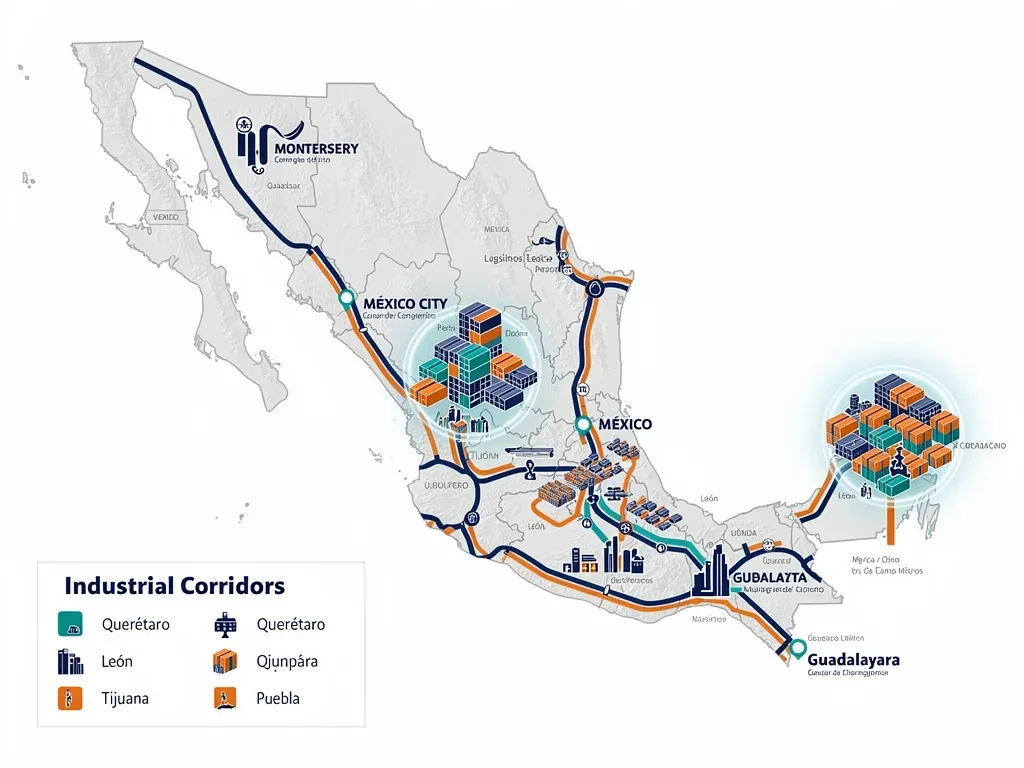
Northern Border States: The Nearshoring Hotbed
States like Nuevo León (Monterrey), Chihuahua (Ciudad Juárez), and Baja California (Tijuana) are at the forefront of the nearshoring wave, leading to exceptionally high Mexican warehouse occupancy rates. Their direct proximity to the U.S. border makes them ideal for manufacturing and assembly operations serving the North American market.
Monterrey, in particular, has emerged as a major industrial hub, attracting significant investment in automotive, electronics, and aerospace sectors. The robust infrastructure and availability of skilled labor in these regions further enhance their appeal.
The northern border continues to be a magnet for industries looking to optimize their supply chains with direct access to the U.S.
Monterrey: Strong automotive and electronics manufacturing base.
Ciudad Juárez: Key for electronics and medical device production.
Tijuana: Strategic for cross-border logistics and manufacturing.
Central Mexico: Logistics and Distribution Nexus
The Bajío region, encompassing states like Querétaro, Guanajuato, and San Luis Potosí, serves as Mexico's central logistics and distribution hub. Its central location provides efficient access to major cities and ports, making it crucial for national distribution networks.
These states have witnessed substantial growth in logistics, automotive, and aerospace industries, contributing significantly to the overall Mexican warehouse occupancy rates. The development of modern industrial parks with advanced infrastructure has been a key factor.
The Bajío region's strategic location positions it as an indispensable link in both national and international supply chains.
Government Policies and Infrastructure Investment
The sustained high Mexican warehouse occupancy rates are also a reflection of supportive government policies and ongoing investments in infrastructure. These initiatives create a conducive environment for industrial growth and attract both domestic and foreign capital.
Government programs aimed at facilitating foreign investment and streamlining regulatory processes have played a crucial role. These policies reduce barriers to entry and operation for businesses.
Moreover, significant investments in transportation infrastructure, including highways, railways, and ports, enhance connectivity and efficiency for logistics operations.
These governmental efforts are vital in sustaining the momentum seen in the industrial real estate sector. The commitment to improving infrastructure directly benefits businesses reliant on efficient logistics.
Trade Agreements and Economic Stability
The existence of robust trade agreements, such as the USMCA (United States-Mexico-Canada Agreement), provides a stable and predictable framework for international trade and investment. This certainty is a major draw for companies considering Mexico for their operations, directly impacting Mexican warehouse occupancy rates.
Mexico's macroeconomic stability, characterized by controlled inflation and a growing economy, further instills confidence in investors. A stable economic environment reduces risk and encourages long-term commitments from businesses.
These factors combine to create an attractive investment climate, reinforcing Mexico's position as a global manufacturing and logistics powerhouse.
Challenges and Future Outlook for Mexican Warehouse Occupancy Rates
Despite the impressive stability, the Mexican industrial real estate market faces certain challenges that could influence future Mexican warehouse occupancy rates. These include land availability, rising construction costs, and the need for continuous infrastructure upgrades.
The scarcity of prime industrial land in established hubs is becoming a concern, potentially driving up rental costs and slowing new development. Additionally, global supply chain disruptions and inflation are impacting construction material costs.
Addressing these challenges will be crucial for maintaining Mexico's competitive edge and ensuring sustained growth in industrial capacity.
The proactive management of these issues will determine the long-term trajectory of industrial development in Mexico. Continuous adaptation and strategic planning are essential.
Addressing Land Scarcity and Development Costs
Developers are increasingly looking beyond traditional industrial corridors to find suitable land for new warehouse projects. This involves exploring secondary markets and investing in infrastructure development in previously underserved areas.
Innovative construction techniques and sustainable building practices are also being adopted to mitigate rising costs and improve efficiency. These efforts aim to keep the supply of industrial space aligned with demand.
Strategic urban planning and collaboration between public and private sectors will be vital in overcoming land and cost challenges.
Exploration of new industrial parks in emerging regions.
Focus on multi-story warehouse solutions in dense urban areas.
Incentives for sustainable and cost-effective construction methods.
Maintaining Infrastructure Competitiveness
While significant investments have been made, continuous upgrades to Mexico's transportation and energy infrastructure are essential. Efficient logistics depend on well-maintained roads, railways, and ports, as well as reliable energy supply.
The integration of advanced technologies, such as automation and smart logistics solutions, will also be critical for enhancing operational efficiency in warehouses. This ensures Mexico remains competitive on a global scale.
Ongoing investment in both physical and digital infrastructure is paramount for supporting the high demand for industrial space.
The Role of Skilled Labor and Human Capital
The availability of a skilled workforce is another critical component underpinning the high Mexican warehouse occupancy rates. Mexico benefits from a young and growing population, with a strong emphasis on technical education and vocational training.
The presence of a capable labor force is a significant draw for manufacturing and logistics companies. Businesses need access to workers proficient in advanced manufacturing techniques and modern logistics operations.
This human capital advantage complements the geographical and economic benefits, making Mexico an attractive location for industrial investment.
Investing in education and training programs is crucial to ensure a continuous supply of skilled labor that meets the evolving demands of the industrial sector.
Specialized Training and Technical Education
Mexico's educational institutions, particularly technical universities and vocational schools, play a vital role in preparing the workforce for industrial demands. Programs tailored to manufacturing, logistics, and engineering provide companies with ready access to skilled professionals.
Collaborations between industry and academia are common, ensuring that educational curricula remain relevant to the needs of the industrial sector. This proactive approach helps maintain a competitive labor market.
The focus on practical, industry-specific skills directly supports the operational efficiency of warehouses and manufacturing plants.
Impact on the broader Mexican Economy
The sustained high Mexican warehouse occupancy rates have a profound positive impact on the broader Mexican economy. This robust activity translates into job creation, increased tax revenues, and a boost to related industries such as construction, transportation, and technology.
The growth in industrial capacity strengthens Mexico's position as a key player in global trade and manufacturing. It also fosters economic diversification and reduces reliance on single sectors.
This industrial dynamism contributes significantly to the nation's GDP and overall economic stability.
The ripple effect of a thriving industrial real estate sector extends far beyond the immediate industry, benefiting numerous other economic segments.
Job Creation and Economic Growth
The expansion of industrial facilities and the high utilization of warehouses directly lead to the creation of numerous jobs across various skill levels. This includes positions in manufacturing, logistics, administration, and support services.
Increased employment contributes to higher consumer spending and overall economic growth. The industrial sector acts as a powerful engine for national prosperity.
The direct and indirect job creation is a tangible benefit of the sustained high Mexican warehouse occupancy rates, impacting countless families and communities.
Key Point | Brief Description |
|---|---|
Sustained Occupancy | Mexican warehouse occupancy rates consistently maintained 97% nationwide. |
Driving Factors | Nearshoring, e-commerce growth, and strategic geographical advantages are key. |
Key Regions | Northern border states and the Bajío region lead in industrial demand. |
Future Outlook | Challenges include land scarcity and construction costs, requiring strategic solutions. |
Frequently Asked Questions About Mexican Warehouse Occupancy Rates
What factors contribute to high Mexican warehouse occupancy rates?▼
Several factors contribute, including the nearshoring trend driven by companies seeking proximity to the U.S. market, the rapid growth of e-commerce within Mexico, and strategic investments in infrastructure. Favorable trade agreements like USMCA also play a crucial role in attracting and retaining industrial tenants.
Which regions in Mexico have the highest warehouse occupancy?▼
The northern border states such as Nuevo León (Monterrey), Chihuahua (Ciudad Juárez), and Baja California (Tijuana) consistently show very high occupancy due to nearshoring. Additionally, the central Bajío region, including Querétaro and Guanajuato, is a significant logistics and manufacturing hub maintaining strong rates.
How does nearshoring impact Mexican warehouse occupancy rates?▼
Nearshoring significantly boosts demand for industrial space as international companies relocate operations closer to North American markets. This influx of manufacturing and logistics operations directly translates into a higher utilization of warehouses, maintaining elevated Mexican warehouse occupancy rates across key industrial corridors.
What are the challenges to maintaining high occupancy rates?▼
Challenges include the increasing scarcity of prime industrial land in established areas, which can drive up costs. Rising construction material prices and the need for continuous upgrades to existing infrastructure also pose hurdles. Addressing these factors is essential for sustainable growth in industrial capacity.
What is the long-term outlook for Mexico's industrial real estate?▼
The long-term outlook remains positive, driven by continued nearshoring and domestic e-commerce growth. Strategic investments in infrastructure, combined with a skilled workforce and stable economic policies, are expected to support robust demand for industrial space. Mexico is poised to maintain its strong position in global supply chains.
Perspectives
The sustained 97% Mexican warehouse occupancy rates underscore Mexico's pivotal role in global supply chains and manufacturing. This stability is not merely a fleeting trend but a reflection of deep-seated economic shifts and strategic advantages.
Moving forward, it will be crucial to monitor how challenges like land availability and infrastructure demands are addressed, as these factors will shape the future trajectory of industrial development and ensure Mexico continues to be a magnet for investment and a key player in the global economy.