Mexico's $4 Billion Infrastructure Program: Freight Logistics Revamp
Advertisements
Wondering how cross-border supply chains will keep pace with surging nearshoring demand across North America? Mexico has launched an ambitious $4 billion Freight Logistics Revamp designed to modernize key transit corridors, seaports, and U.S. border crossings.
By upgrading freight rail networks, expanding customs capacity, and streamlining highway bottlenecks, federal planners aim to slash cargo transit times and lower shipping expenses. Faster multimodal connectivity directly strengthens industrial integration under the USMCA trade framework, benefiting manufacturers and importers on both sides of the border.
Whether you manage cross-border distribution or track regional trade investments, these infrastructure upgrades carry immediate commercial weight. Here is where the capital is flowing first and what milestones businesses need to watch next.
Overview of Mexico's 4 Billion Infrastructure Program
The Mexican government has committed $4 billion to a sweeping infrastructure program designed to overhaul national freight logistics. This investment targets critical bottlenecks and aims to create a more integrated and efficient transportation network.
The program encompasses upgrades to railways, highways, ports, and customs facilities, all crucial components for the seamless movement of goods. This strategic focus is expected to significantly boost Mexico’s trade capabilities and attract further foreign investment.
The initiative is not merely about physical infrastructure; it also includes technological advancements and process improvements to streamline operations. Such comprehensive modernization efforts are projected to yield substantial economic benefits.
Key Investment Areas and Objectives
A primary objective of the program is to enhance connectivity between industrial centers, major ports, and border crossings. This involves expanding and rehabilitating existing infrastructure, as well as developing new routes where necessary.
The goal is to reduce logistics costs and transit times, making Mexican exports more competitive and facilitating the import of essential materials. Improved infrastructure will also support the growth of domestic industries by enabling more efficient distribution within the country.
The government's strategy for Freight Logistics Revamp emphasizes public-private partnerships, leveraging private sector expertise and capital. This collaborative approach is critical for the timely and effective execution of such a large-scale undertaking.
Expansion of railway networks to increase cargo capacity and speed.
Modernization of major highway corridors to improve safety and flow.
Upgrades to port facilities to handle larger volumes and faster turnaround times.
Implementation of advanced customs technologies to expedite border crossings.
Recent data helps clarify the scope and sequence of events. Markets and local communities reacted as information became public, with agencies coordinating responses under established protocols.
Economic Assessment: Potential Benefits and Challenges
The economic assessment of Mexico's $4 billion infrastructure program points to substantial potential benefits, including increased GDP, job creation, and enhanced trade flows. These improvements are critical for Mexico’s long-term economic stability and growth.
Reduced logistics costs and improved efficiency are expected to save businesses significant amounts, making Mexico a more attractive location for manufacturing and distribution. This will likely lead to a boost in exports and a more robust domestic market.
However, the program also faces challenges such as securing adequate funding, managing complex construction projects, and addressing potential environmental impacts. Effective oversight and transparent execution will be paramount to realizing the full economic potential of Modernizing National Freight Logistics.
Impact on Trade and Supply Chains
The modernization of Mexico freight logistics is expected to have a profound impact on trade, particularly with its North American partners. Faster and more reliable transportation will strengthen existing supply chains and encourage new investments.
For businesses operating under the USMCA agreement, improved Mexican infrastructure means reduced lead times and greater predictability in cross-border movements. This can enhance the competitiveness of industries reliant on components and finished goods from Mexico.
The program aims to solidify Mexico's position as a key player in global supply chains, attracting companies looking for efficient and cost-effective manufacturing and logistics solutions. This strategic enhancement is a cornerstone of Freight Logistics Revamp.
Streamlined cross-border trade with the United States and Canada.
Enhanced attractiveness for foreign direct investment in manufacturing.
Reduced operational costs for businesses involved in import and export.
Improved resilience of supply chains against disruptions.
The topic’s background connects the update to previous milestones. Analysts highlight short-term signals that deserve attention before broader trends become clear.
Regional Impact and Connectivity
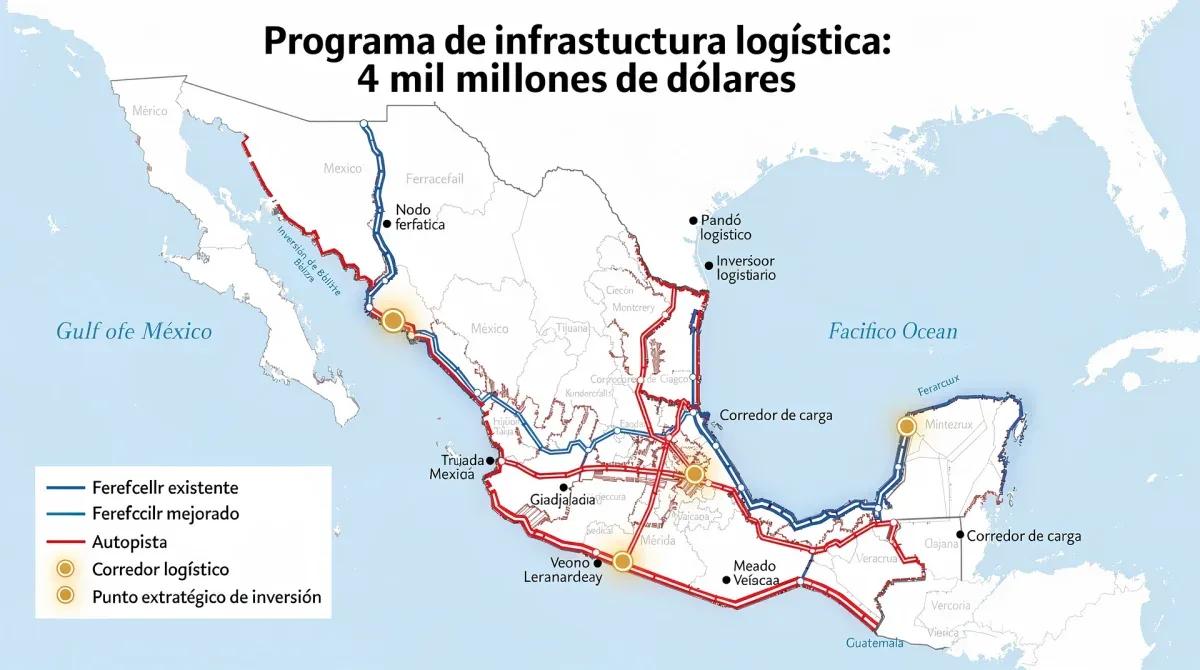
The $4 billion infrastructure program is designed to have a widespread regional impact across Mexico, addressing disparities in logistics capabilities. Key regions, including those bordering the U.S. and major industrial corridors, are receiving significant attention.
Improved connectivity within Mexico will facilitate the movement of agricultural products, raw materials, and finished goods from production sites to consumption centers and export hubs. This internal efficiency is as crucial as international connectivity.
Specific projects are targeting areas with high economic activity but underdeveloped infrastructure, aiming to unlock their full potential. The program’s success hinges on its ability to create a cohesive national logistics network.
Focus on Northern Border and Port Modernization
The northern border region, a critical gateway for trade with the U.S., is a major focus of the infrastructure program. Investments here aim to reduce congestion and speed up customs processes, which are vital for efficient cross-border freight.
Port modernization efforts are concentrated on both the Pacific and Gulf coasts, with expansions and technological upgrades to increase capacity and efficiency. These improvements are essential for handling the growing volume of international maritime trade.
By enhancing these critical nodes, the program seeks to create a more fluid and responsive national logistics system. The strategic importance of Freight Logistics Revamp cannot be overstated for these regions.
Direct quotes and attributed summaries show positions, responsibilities and next steps. Independent experts assess the credibility of the information and likely outcome scenarios.
Technological Integration and Digitalization
A key aspect of Modernizing National Freight Logistics involves the integration of advanced technologies and digitalization. This includes implementing smart logistics solutions, automated processes, and data analytics to optimize operations.
Digital platforms for cargo tracking, inventory management, and customs declarations are being introduced to enhance transparency and reduce administrative burdens. These technological upgrades are expected to significantly improve efficiency and reduce human error.
The shift towards a more digitalized logistics environment will also foster greater collaboration among stakeholders, from shippers and carriers to customs authorities. This modernization is crucial for keeping pace with global logistics standards.
Smart Logistics Solutions and Efficiency Gains
The adoption of smart logistics solutions, such as IoT sensors for real-time cargo monitoring and AI-powered route optimization, is central to the program. These technologies promise to deliver substantial efficiency gains and cost savings.
By leveraging data, logistics operators can make more informed decisions, respond quickly to disruptions, and optimize their resource allocation. This technological push is a defining feature of the current infrastructure drive.
The overall objective is to create a resilient and agile logistics ecosystem capable of adapting to future demands and challenges. This focus on advanced solutions underpins the entire effort to modernize Mexico freight logistics.
Implementation of real-time tracking systems for improved visibility.
Use of artificial intelligence for predictive analytics in logistics.
Development of digital customs platforms for faster clearances.
Enhanced cybersecurity measures for protecting sensitive logistics data.
For now, practical effects are concentrated in specific areas, while broader impacts depend on future decisions and compliance with new guidelines.
Environmental and Social Considerations
Beyond economic benefits, Modernizing National Freight Logistics also faces critical environmental and social considerations. Sustainable development practices are being integrated into project planning to mitigate negative impacts.
Efforts include promoting greener transportation modes, reducing carbon emissions from freight operations, and ensuring responsible land use. The program aims to balance economic growth with environmental stewardship.
Socially, the infrastructure projects are expected to create jobs and improve local economies, but careful planning is needed to address potential displacement and ensure equitable benefits for affected communities. Stakeholder engagement is crucial for successful implementation.
Sustainable Practices in Infrastructure Development
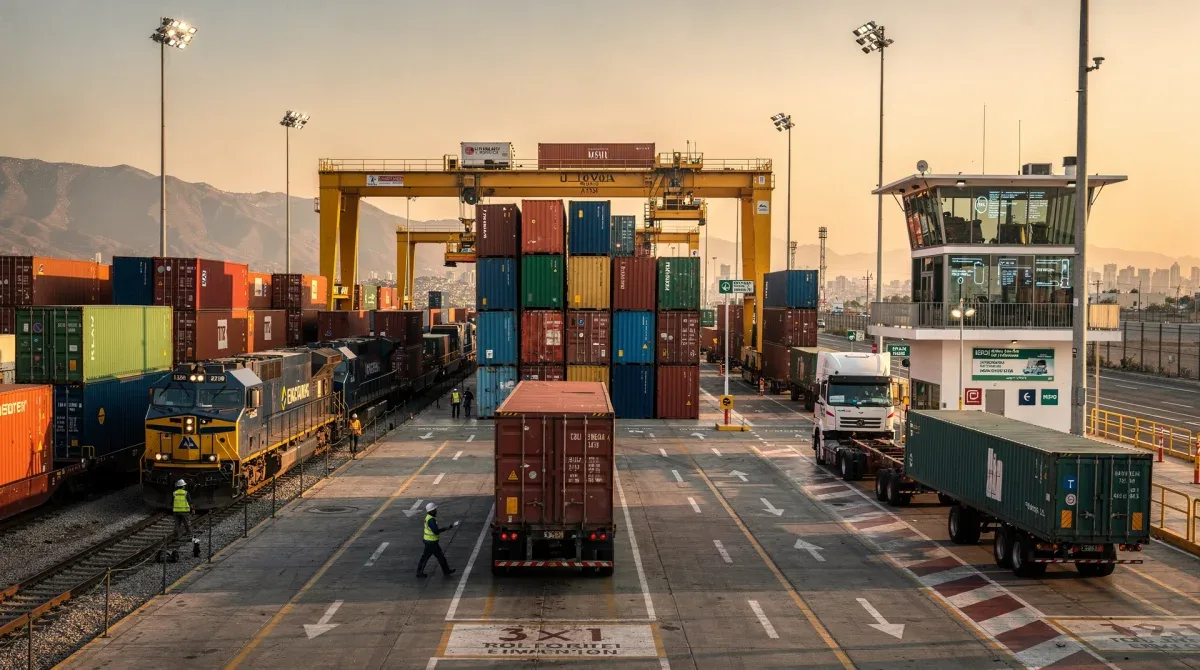
The program is prioritizing sustainable construction methods and materials, along with designing infrastructure that minimizes environmental footprints. This includes developing energy-efficient transportation systems and protecting biodiversity.
Promoting intermodal transportation, particularly rail, is a key strategy to reduce reliance on less fuel-efficient trucking. This shift contributes to lower emissions and less road congestion, aligning with global sustainability goals.
The social impact extends to ensuring fair labor practices during construction and providing training opportunities for local communities. Addressing these aspects is vital for the long-term success and acceptance of Modernizing National Freight Logistics.
Integration of renewable energy sources in logistics infrastructure.
Reforestation programs and ecological compensation for construction impacts.
Community engagement initiatives to address local concerns.
Promotion of electric and hybrid vehicles in last-mile delivery.
The government's strategy emphasizes public-private partnerships, leveraging private sector expertise and capital. This collaborative approach is critical for the timely and effective execution of such a large-scale undertaking.
Funding and Investment Structure
The $4 billion allocated for Modernizing National Freight Logistics comes from a combination of public funds, private investment, and potentially international financing. The mixed funding model is designed to optimize resource allocation and project execution.
Public-private partnerships (PPPs) are a cornerstone of the funding strategy, allowing the government to share financial burdens and leverage private sector efficiencies. These partnerships are crucial for accelerating project delivery and ensuring long-term sustainability.
Attracting foreign investment is also a key objective, with the program presenting significant opportunities for international firms in infrastructure development and logistics technology. The robust investment structure underpins the ambitious scope of the modernization effort.
Role of Public-Private Partnerships
Public-private partnerships play a pivotal role in the execution of the infrastructure program, bringing together governmental oversight with private sector innovation and financial capacity. This collaboration is essential for complex projects.
These partnerships often involve concession agreements, where private entities finance, build, and operate infrastructure for a defined period, recouping their investment through tolls or user fees. This model ensures efficient management and maintenance.
The success of these PPPs will be critical in determining the overall effectiveness and speed of implementation for the entire program. Sound governance and clear contractual frameworks are paramount for these collaborations.
The comprehensive nature of this modernization effort underscores Mexico’s commitment to strengthening its role as a manufacturing and export hub. This strategic focus is expected to significantly boost Mexico’s trade capabilities and attract further foreign investment.
Future Outlook and Long-Term Implications
The future outlook for Mexico freight logistics, post-implementation of the $4 billion program, appears promising. The long-term implications include enhanced economic integration, increased trade competitiveness, and a more resilient national economy.
As the modernized infrastructure comes online, Mexico is expected to solidify its position as a preferred manufacturing and logistics hub in North America. This will attract further investments and create sustained economic growth.
The program’s success will also serve as a model for future large-scale infrastructure projects in the region, demonstrating the transformative power of strategic investment in logistics. This is a critical step for Freight Logistics Revamp.
Mexico's Role in North American Trade
With improved national freight logistics, Mexico's role in North American trade is set to expand significantly. The program will facilitate more efficient cross-border movement of goods, strengthening supply chains across the continent.
This enhanced connectivity will support the objectives of the USMCA agreement, fostering deeper economic ties and creating a more integrated North American market. Businesses in the U.S. and Canada stand to benefit from these efficiencies.
The long-term vision positions Mexico as an indispensable link in global trade, leveraging its strategic geographic location and upgraded infrastructure. The success of Modernizing National Freight Logistics is key to this vision.
The Mexican government has committed $4 billion to a sweeping infrastructure program designed to overhaul national freight logistics. This investment targets critical bottlenecks and aims to create a more integrated and efficient transportation network.
Key Point | Brief Description |
|---|---|
Investment Scope | Mexico is investing $4 billion to modernize its national freight logistics infrastructure. |
Key Areas | Focus on railways, highways, ports, and border crossings to enhance connectivity. |
Economic Impact | Expected to boost GDP, create jobs, reduce logistics costs, and increase trade. |
Challenges | Includes funding, project management, and environmental/social considerations. |
Frequently Asked Questions About Mexico's Freight Logistics Program
What is the primary goal of Mexico's $4 billion infrastructure program?▼
The primary goal is to modernize national freight logistics by upgrading key transportation infrastructure across Mexico. This aims to enhance efficiency, reduce costs, and improve connectivity for both domestic and international trade, making Mexico more competitive globally.
Which specific infrastructure areas are being targeted?▼
The program targets a comprehensive range of infrastructure, including railways, highways, ports on both coasts, and critical border crossings with the United States. Investments also extend to technological integration for smart logistics solutions and digital customs processes.
How will this program impact Mexico's trade relations with the U.S.?▼
The program is expected to significantly streamline cross-border trade by reducing transit times and improving efficiency at customs. This will strengthen supply chains between Mexico and the U.S., enhancing competitiveness for businesses operating under the USMCA agreement.
What are the main economic benefits anticipated from this modernization?▼
Anticipated economic benefits include a boost in Mexico's GDP, substantial job creation, and significant reductions in logistics costs for businesses. It will also attract more foreign direct investment, solidifying Mexico's role as a key manufacturing and export hub.
What challenges does Mexico face in implementing this large-scale program?▼
Key challenges include securing consistent funding, managing the complexity of numerous construction projects, and addressing potential environmental and social impacts. Effective governance, public-private partnerships, and community engagement are crucial for overcoming these hurdles.
Looking Ahead
The ongoing efforts to modernize Mexico freight logistics through the $4 billion infrastructure program represent a pivotal moment for the nation's economic trajectory. As projects advance, stakeholders will closely monitor their impact on trade efficiency, regional development, and overall economic stability.
The successful implementation of Modernizing National Freight Logistics will not only reshape Mexico’s internal logistics landscape but also redefine its strategic importance in global supply chains, particularly within North America. Future reports will detail specific project completions and their quantifiable benefits.