USMCA Joint Review Preparedness: 3 Crucial Tariff Regulations to Monitor Ahead of Late 2026 Talks
Advertisements
The USMCA Joint Review 2026 has moved from preparation into active negotiations, placing several important North American trade rules under renewed scrutiny.
The first formal review occurred on July 1, 2026, but the United States did not agree to renew the agreement in its existing form.
Automotive rules of origin, agricultural market access, and digital trade remain three areas businesses should watch as negotiations and future reviews continue.
Understanding the USMCA Joint Review Mechanism
The USMCA entered into force in 2020 with a review mechanism requiring the three participating countries to evaluate the agreement after six years.
The first joint review took place on July 1, 2026, when representatives from the United States, Mexico, and Canada discussed its operation.
Because renewal was not agreed at that meeting, negotiations continue while the agreement itself remains in force under its existing framework.
What Happened During the 2026 Review
The July review did not automatically terminate the agreement, despite the United States declining to renew it in its current form.
Instead, the countries continued discussions covering manufacturing, agriculture, economic security, labor, automobiles, and other important areas of regional trade.
The process therefore remains highly relevant for companies whose supply chains depend on preferential access across the three North American markets.
Tariff Area 1: Automotive Rules of Origin
Automotive rules of origin remain one of the most important issues surrounding the USMCA Joint Review 2026 and subsequent negotiations.
These provisions determine how much qualifying North American content a vehicle must contain to receive preferential treatment under the agreement.
Any adjustment could influence sourcing strategies, manufacturing costs, investment decisions, and the organization of automotive supply chains throughout North America.
Impact on Manufacturing and Supply Chains
Manufacturers have already adapted purchasing and production strategies to comply with regional content requirements established under the USMCA framework.
Stricter sourcing requirements can encourage regional production, but they can also increase costs when qualifying components are more expensive or difficult to obtain.
This balance between regional integration and manufacturing competitiveness remains central to discussions involving the automotive industries of all three countries.
Potential Adjustments and Business Strategies
Companies should review component sourcing and documentation carefully because even limited changes to origin requirements can affect tariff eligibility.
Manufacturers may also evaluate additional regional suppliers to reduce exposure to components that could create compliance problems under future interpretations.
Scenario planning can help businesses estimate how different sourcing rules would affect production costs, margins, and investment priorities.
Review Component Origins: Maintain accurate records showing where important vehicle parts and materials originate.
Assess Regional Suppliers: Identify alternative suppliers within the United States, Mexico, and Canada.
Model Compliance Costs: Estimate the financial effect of possible adjustments to origin requirements.
Mexico remains especially important because its manufacturing sector is deeply integrated into U.S. and Canadian automotive production networks.
The existing framework has encouraged regional sourcing while also generating debate about costs, complexity, and competitiveness against producers outside North America.
Businesses connected to Mexican manufacturing should therefore follow future rule-of-origin discussions closely as negotiations continue.
Tariff Area 2: Agricultural Trade Barriers and Quotas
Agricultural trade remains another sensitive component of the USMCA because market access varies considerably between individual products and national systems.
Tariff-rate quotas, regulatory requirements, and sanitary measures can influence how easily agricultural goods move between Canada, Mexico, and the United States.
Dairy, poultry, sugar, produce, and other products therefore remain important areas to monitor as governments evaluate existing commitments.

Key Areas of Contention
Canadian dairy market access has repeatedly generated disputes involving tariff-rate quotas and how access commitments are administered under the agreement.
Trade in sugar and other agricultural products also involves specialized rules that can directly affect prices, supply decisions, and market opportunities.
Sanitary and phytosanitary requirements add another layer because legitimate safety measures can also create significant obstacles for agricultural exporters.
Preparing for Agricultural Policy Shifts
Agricultural businesses should identify which products depend on quotas or other special market-access arrangements under the current agreement.
They should also monitor dispute decisions because previous interpretations can influence how governments approach similar provisions during later negotiations.
Producers and exporters can use industry associations to understand proposals early and communicate the operational effects of possible policy changes.
Monitor Disputes: Follow decisions involving agricultural market access and implementation of existing commitments.
Review Export Exposure: Identify products especially dependent on tariff-rate quotas or border procedures.
Engage Industry Groups: Follow coordinated industry responses to proposed changes in agricultural trade rules.
Tariff Area 3: Digital Trade and E-Commerce
Digital commerce has become increasingly important since the agreement entered into force, creating new questions about regulation and cross-border services.
USMCA contains important digital trade provisions, including restrictions on customs duties applied to certain electronic transmissions between member countries.
As technology changes, governments may revisit how existing definitions and obligations apply to emerging digital products, platforms, and business models.
Evolving Digital Trade Landscape
Cloud computing, artificial intelligence, online platforms, and digitally delivered services are expanding faster than many traditional regulatory frameworks.
This creates questions about how older definitions should apply when a service combines data processing, software, subscriptions, and cross-border digital delivery.
The broader digital economy will therefore remain relevant as policymakers consider whether existing rules require clarification or modernization.
Data Flows and Regulatory Costs
Cross-border data flows are especially important for companies operating digital services across several North American markets at the same time.
Data-localization requirements can increase infrastructure and compliance expenses even when they are not formally classified as traditional tariffs.
Changes to these rules could therefore influence operational costs, technology architecture, cybersecurity practices, and market-entry decisions for digital businesses.
Strategies for Digital Businesses
Digital companies should map which products and services depend on cross-border data transfers or protections established by the current agreement.
They should also evaluate whether changes in classification could affect digital products that currently move across borders without conventional customs duties.
Regular regulatory reviews can help companies identify emerging obligations before they require expensive changes to platforms or data infrastructure.
Review Product Definitions: Understand how each digital offering fits current trade classifications.
Monitor Data Rules: Follow proposals involving cross-border data transfers and localization requirements.
Evaluate Compliance Costs: Model how regulatory changes could affect digital operations across North America.
The Broader Economic Context for the Review
The USMCA negotiations are unfolding within a broader environment shaped by supply-chain security, industrial policy, tariffs, and global manufacturing competition.
Each country approaches the agreement with different economic priorities, making negotiations broader than any single tariff or sector-specific dispute.
The outcome can influence investment decisions throughout North America because companies value predictable rules when building long-term regional supply chains.
Mexico's Role in Regional Supply Chains
The Mexican economy occupies a central position because manufacturing and trade are closely integrated with U.S. and Canadian industries.
Automotive production, electronics, agriculture, machinery, and other sectors rely on goods crossing North American borders during different stages of production.
Changes to trade rules can therefore affect not only Mexican exporters but also companies elsewhere that depend on Mexican factories and suppliers.
Stakeholder Engagement and Advocacy
Companies, industry groups, labor organizations, and other stakeholders can provide governments with information about how existing rules affect real operations.
Useful submissions typically explain impacts on investment, sourcing, employment, compliance costs, and competitiveness using specific evidence rather than general arguments.
These contributions can help negotiators understand how proposed changes may affect different industries across the integrated North American economy.
Preparing Your Business for USMCA Changes
Businesses should treat ongoing negotiations as a reason to review exposure rather than assume that current trade rules will remain unchanged indefinitely.
Supply-chain audits can reveal which products depend most heavily on preferential treatment, regional sourcing, quotas, or other USMCA provisions.
This information allows companies to prioritize risks and build contingency plans without immediately changing established operations based on speculation.
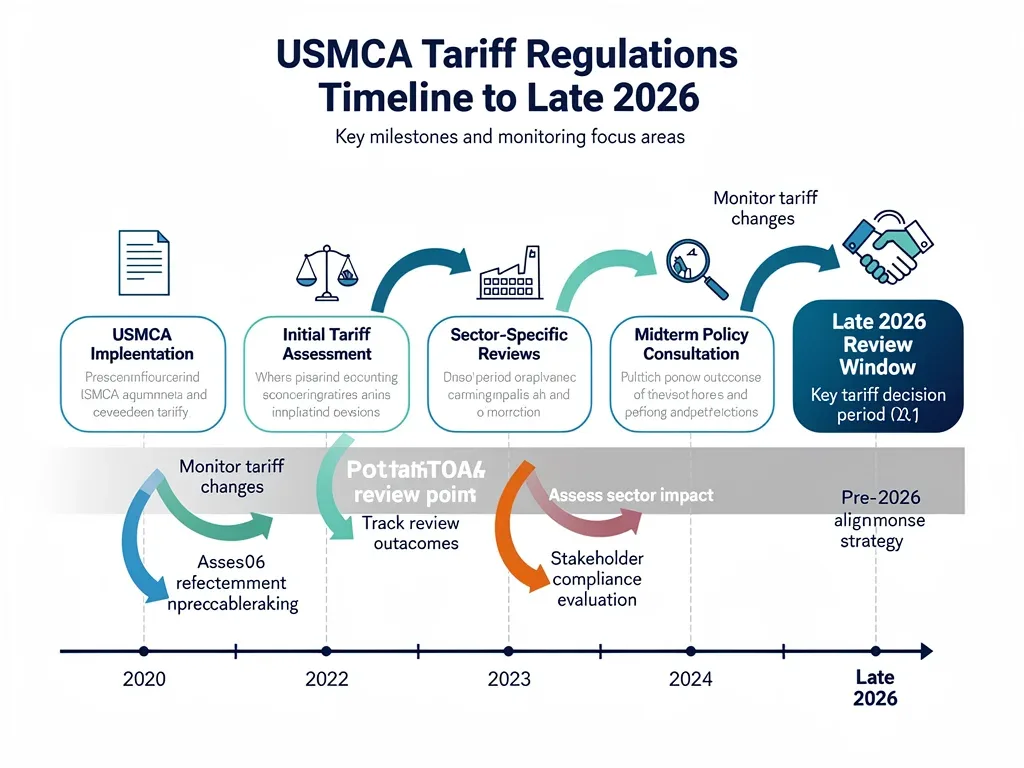
Key Preparedness Steps
Scenario planning should consider several outcomes rather than assuming negotiations will produce either complete continuity or major disruption.
Companies can estimate potential impacts from stricter origin rules, new administrative requirements, reduced market access, or additional compliance obligations.
Legal and trade specialists can also help interpret technical provisions when a company's exposure involves complex customs or origin calculations.
Scenario Planning: Model several possible regulatory outcomes and their operational effects.
Trade Compliance Review: Confirm that current documentation and classification practices remain accurate.
Supply-Chain Diversification: Identify alternatives for highly concentrated sourcing relationships where appropriate.
The Role of Mexico in the USMCA Review
Mexico is central to the agreement because it serves as a major manufacturing location and an important market within North America.
Its access to the U.S. and Canadian markets can influence investment decisions in automotive manufacturing, electronics, machinery, and other industries.
The country's ability to attract foreign direct investment is therefore closely connected with expectations surrounding regional trade stability.
Anticipating Mexico's Negotiating Priorities
Mexico has an interest in preserving predictable market access while protecting the competitiveness of industries deeply integrated into regional supply chains.
Manufacturing rules, agriculture, labor, customs procedures, and economic security have all appeared within negotiations connected to the review process.
Future positions may evolve as discussions continue, so businesses should rely on official announcements instead of assuming specific negotiating outcomes.
Nearshoring and Regional Manufacturing
USMCA has also become important to companies evaluating whether more production should occur closer to their North American customers.
The expansion of nearshoring initiatives has increased attention on infrastructure, customs efficiency, regional sourcing, and manufacturing capacity in Mexico.
Greater certainty around trade rules can encourage long-term investments, while unresolved policy questions may lead businesses to delay major commitments.
Supply-Chain Decisions Beyond Tariffs
Tariffs are only one factor influencing location decisions because businesses must also consider logistics, labor, infrastructure, energy, and regulatory conditions.
Rules of origin can nevertheless influence these calculations by determining whether products qualify for preferential treatment inside the regional market.
Companies considering new facilities should therefore evaluate both operational economics and potential changes to the trade rules supporting regional production.
Future Outlook After the 2026 Review
The July 2026 review did not produce renewal of the USMCA in its existing form, but the agreement remains operational.
The United States has since moved toward another review cycle, including a public consultation process connected with the 2027 joint review.
This means businesses should view the USMCA Joint Review 2026 as part of an ongoing process rather than a completed one-time event.
What Businesses Should Monitor Next
Official announcements remain the most reliable source for determining which proposals actually advance into negotiations or formal regulatory changes.
Automotive rules, agriculture, regional manufacturing, economic security, labor, and digital commerce remain relevant areas for companies with North American operations.
Continued monitoring can help businesses distinguish confirmed policy changes from negotiating positions, proposals, or speculation surrounding future reviews.
Key Area | Focus for Monitoring |
|---|---|
Automotive Rules of Origin | Regional sourcing requirements and automotive compliance rules. |
Agricultural Trade | Tariff-rate quotas, market access, and regulatory barriers. |
Digital Trade | Digital products, cross-border data flows, and regulatory requirements. |
Future Reviews | Ongoing negotiations and the next USMCA review process. |
Frequently Asked Questions About the USMCA Joint Review
When did the first USMCA joint review take place? ▼
The first formal joint review took place on July 1, 2026. The United States did not agree to renew the agreement in its existing form.
Does that mean the USMCA ended in July 2026? ▼
No. The agreement remains in force while the participating countries continue discussions and move through the review process established by the agreement.
Why are automotive rules of origin important? ▼
They determine whether vehicles and components satisfy regional sourcing requirements needed to receive preferential tariff treatment under the USMCA.
What are tariff-rate quotas in agricultural trade? ▼
TRQs generally allow a defined quantity of eligible goods to enter under one tariff rate before different rates apply beyond the quota.
Could the review affect digital trade? ▼
Digital trade remains relevant because cross-border data rules, electronically delivered products, and emerging technologies continue changing rapidly.
Why is Mexico important to the review process? ▼
Mexico is deeply integrated into North American manufacturing, agriculture, and supply chains, making trade rules especially important for regional investment decisions.
What This Means
The USMCA Joint Review 2026 did not end with a simple renewal, leaving important trade questions open for continued negotiation.
Automotive origin rules, agricultural market access, and digital trade are three areas capable of producing significant operational consequences for businesses.
Companies should monitor confirmed developments, review their exposure, and maintain flexible plans as the United States, Mexico, and Canada continue the process.