Mexico's Industrial Productivity Soars 4.2%: Key Factory Shifts
Advertisements
Mexico's manufacturing sector is undergoing a major evolution, transforming nearshoring promises into measurable economic gains. As global supply chains shift closer to North American borders, factory floors across the region are experiencing a noticeable operational surge.
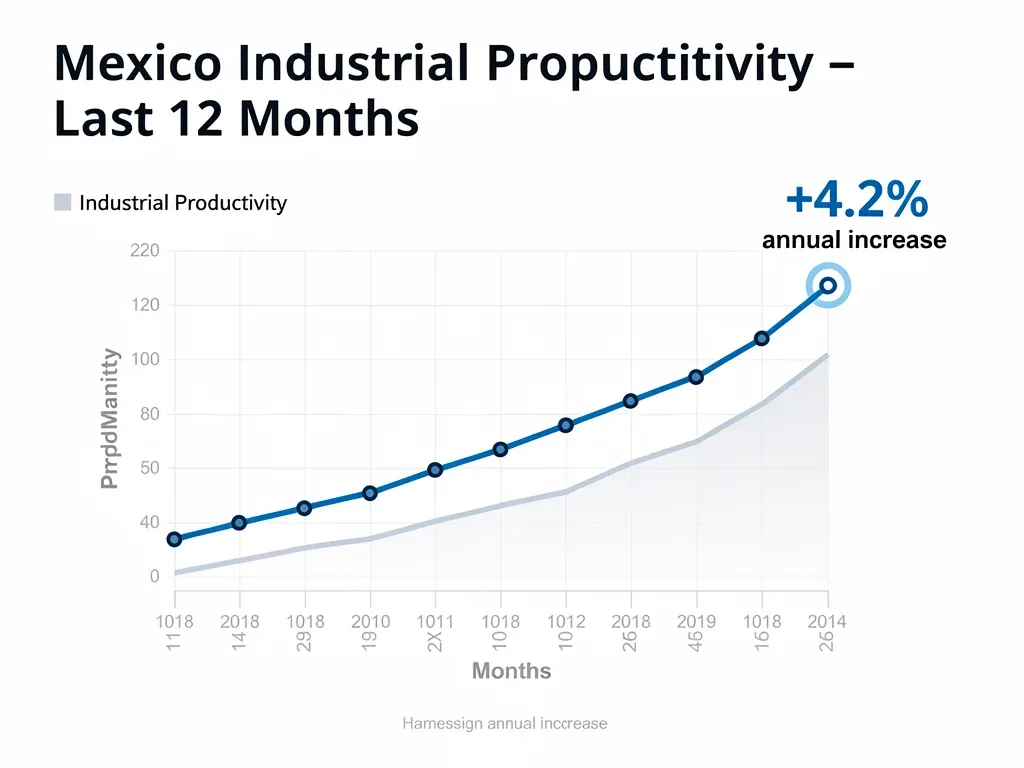
A recent 4.2% jump in Mexico's Industrial Productivity highlights how strategic investments and advanced automation are reshaping national output metrics. This uptick in manufacturing performance reflects modernized assembly processes, improved logistics infrastructure, and higher capacity utilization across key industrial hubs.
Sustaining this momentum will depend on how efficiently domestic suppliers integrate into high-tech manufacturing pipelines. Here is a breakdown of the structural changes, regional shifts, and technological upgrades driving these output gains.
Mexico's Industrial Surge: A 4.2% Climb in Productivity
Mexico's industrial sector has demonstrated robust performance, with National Industrial Productivity in Mexico Climbed 4.2%. This significant increase signals a dynamic period for the nation's manufacturing and broader industrial activities.
The growth reflects a combination of strategic investments, technological adoption, and evolving global supply chain dynamics. Understanding these underlying factors is crucial for grasping the full scope of this economic development.
This surge in productivity underscores Mexico's growing role in the global industrial landscape, attracting attention from international observers and investors alike. The implications extend beyond mere statistics, influencing employment, trade, and economic stability.
Unpacking the Drivers Behind the Productivity Boost
The recent surge in Mexico's industrial productivity is not an isolated event but rather the culmination of several influential factors. Key among these are heightened foreign direct investment, particularly in advanced manufacturing sectors, and a renewed focus on optimizing operational efficiencies within factories.
Government policies aimed at fostering a more competitive industrial environment have also played a crucial role. These policies often include incentives for innovation, infrastructure development, and workforce training programs designed to meet the demands of modern industry.
Furthermore, the ongoing nearshoring trend, where companies relocate production closer to their main markets, has channeled substantial investment into Mexican manufacturing. This strategic shift is directly contributing to the enhanced factory output metrics and overall industrial performance.
The Impact of Nearshoring on Factory Output
Nearshoring has become a powerful catalyst for the Mexican industrial sector, drawing considerable investment and expertise. This relocation strategy, driven by geopolitical and logistical considerations, has led to the establishment of new production facilities and the expansion of existing ones.
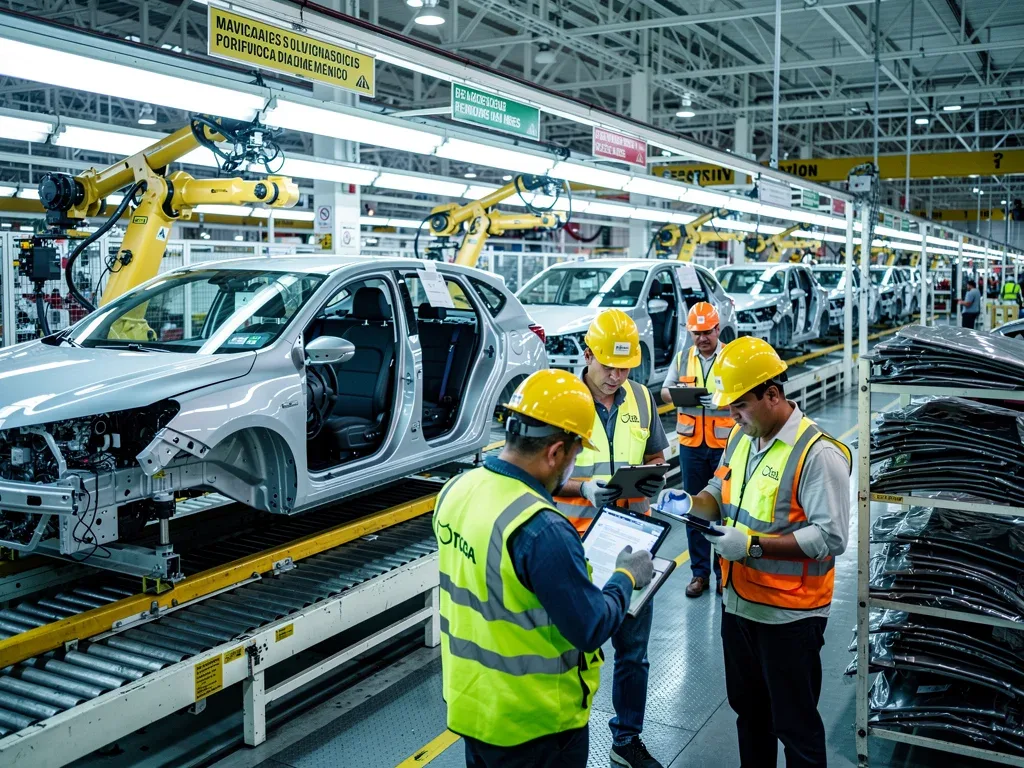
The influx of new companies and capital has necessitated upgrades in technology and processes, directly translating into improved efficiency and higher output per worker. This phenomenon is particularly evident in sectors such as automotive, electronics, and aerospace, where precision and scale are paramount.
Increased foreign direct investment in manufacturing.
Modernization of production lines and adoption of new technologies.
Creation of new high-skill employment opportunities.
Strengthening of local supply chains and industrial ecosystems.
Technological Adoption and Process Optimization
Beyond nearshoring, a significant portion of the productivity gains can be attributed to the widespread adoption of advanced manufacturing technologies. Mexican factories are increasingly integrating automation, artificial intelligence, and data analytics into their operations.
These technological advancements allow for more precise control over production processes, reduced waste, and faster turnaround times. The commitment to process optimization across various industries is yielding tangible results in terms of both quantity and quality of output.
The continuous improvement methodologies, often inspired by global best practices, are helping Mexican manufacturers achieve new benchmarks in efficiency. This focus on optimizing every stage of the production cycle is a fundamental component of the observed productivity climb.
Sectoral Contributions to Mexico's Productivity Growth
The 4.2% increase in Mexico's industrial productivity is not uniformly distributed across all sectors; rather, it is significantly propelled by strong performances in key industries. The automotive, aerospace, and electronics manufacturing sectors have emerged as particularly vital contributors to this national achievement.
These sectors benefit from established supply chains, a skilled workforce, and substantial foreign investment, creating a virtuous cycle of growth and innovation. Their ability to adapt to global demands and integrate advanced technologies positions them at the forefront of Mexico's industrial prowess.
The robust performance of these leading industries highlights Mexico's strategic importance in global manufacturing. Their continued expansion and modernization are critical for sustaining the overall positive trajectory of national industrial productivity.
Automotive Industry's Pivotal Role
The automotive sector remains a cornerstone of Mexico's industrial output, consistently demonstrating high levels of productivity and innovation. The country's strategic location, coupled with favorable trade agreements, makes it an attractive hub for major global automakers.
Recent investments in electric vehicle (EV) production and autonomous driving technologies are further enhancing the sector's capabilities and future growth prospects. This forward-looking approach ensures that the automotive industry continues to be a major driver of industrial productivity.
Expansion of assembly plants and component manufacturing.
Increased adoption of robotics and automation in production.
Focus on sustainable manufacturing practices.
Development of a highly specialized engineering and technical workforce.
Electronics and Aerospace: High-Value Manufacturing
Beyond automotive, the electronics and aerospace industries are also making substantial contributions to Mexico's industrial productivity. These sectors are characterized by high-value-added processes, requiring precision engineering and advanced technological expertise.
The growth in electronics manufacturing is driven by global demand for consumer devices and industrial components, with Mexico serving as a key production base. Similarly, the aerospace industry benefits from its proximity to major markets and a growing ecosystem of specialized suppliers.
Both sectors are actively investing in research and development, fostering a culture of innovation that translates into improved factory output metrics and enhanced competitiveness. Their strategic importance cannot be overstated in the context of Mexico's overall industrial development.
Regional Disparities and Investment Hotspots
While National Industrial Productivity in Mexico Climbed 4.2%, this growth is not evenly distributed across the entire nation. Certain regions, particularly those bordering the United States and those with established industrial corridors, are experiencing more concentrated benefits.
These investment hotspots often possess superior infrastructure, a more readily available skilled workforce, and a history of successful industrial operations. Understanding these regional dynamics is essential for a complete picture of Mexico's industrial expansion.
The concentration of growth in specific areas also presents opportunities for regional development policies to address disparities. Strategic planning can help extend the benefits of increased productivity to other parts of the country, fostering more equitable economic advancement.
Northern States Leading the Charge
The northern states of Mexico, such as Nuevo León, Coahuila, Baja California, and Chihuahua, are at the forefront of industrial growth. Their strategic location facilitates easier logistics and integration with North American supply chains, making them prime destinations for foreign investment.
These regions have developed robust industrial ecosystems, including specialized technical schools and research centers, which support the high-tech manufacturing demands of sectors like automotive and electronics. This synergy creates a highly productive environment.
Proximity to the U.S. market for efficient trade.
Developed infrastructure, including highways and industrial parks.
Availability of a skilled and experienced labor force.
Strong governmental support for industrial development.
Central and Bajío Regions: Emerging Industrial Powerhouses
Beyond the northern border, the central and Bajío regions, including states like Guanajuato, Querétaro, and Jalisco, are also emerging as significant industrial powerhouses. These areas are attracting investment due to their central location, growing urban centers, and increasingly skilled workforce.
These regions are becoming key players in the automotive and aerospace industries, with new manufacturing plants and technology centers being established. The diversification of industrial activity across different geographical areas is a positive sign for Mexico's economic resilience.
The expansion in these regions demonstrates a broader national commitment to industrial development, moving beyond traditional manufacturing hubs. This decentralization helps distribute economic benefits and strengthens the overall industrial base.
Challenges and Opportunities for Sustained Growth
Despite the impressive fact that National Industrial Productivity in Mexico Climbed 4.2%, the path to sustained growth is not without its challenges. Issues such as infrastructure limitations, energy supply concerns, and the need for continuous workforce development remain critical areas for attention.
Addressing these challenges effectively will be paramount for Mexico to maintain its competitive edge and ensure that productivity gains are not just temporary spikes but rather foundational shifts. Proactive measures are required to solidify this positive trajectory.
However, these challenges also present significant opportunities for innovation and strategic investment. By tackling these obstacles head-on, Mexico can further enhance its industrial capabilities and secure its position as a leading global manufacturing hub.
Infrastructure and Energy Demands
The rapid expansion of industrial activity places increasing demands on Mexico's infrastructure and energy supply. Adequate and reliable access to electricity, water, and transportation networks is fundamental for factories to operate efficiently and expand their output.
Investment in modernizing and expanding these critical infrastructures is essential to avoid bottlenecks that could hinder future productivity growth. Public-private partnerships and strategic planning are vital to meet these escalating needs.
The transition to cleaner and more sustainable energy sources also presents both a challenge and an opportunity. By embracing renewable energy, Mexico can not only meet its industrial demands but also enhance its environmental profile and attract green investments.
Workforce Development and Innovation
A highly skilled workforce is the backbone of a productive industrial sector. As National Industrial Productivity in Mexico Climbed 4.2%, there is a continuous need for educational and training programs that align with the evolving demands of advanced manufacturing.
Investing in technical education, vocational training, and upskilling initiatives is crucial to ensure that Mexico's labor force can effectively operate and innovate with new technologies. This focus on human capital development is a long-term strategy for sustained productivity.
Fostering a culture of innovation within industrial enterprises is equally important. Encouraging research and development, supporting startups, and promoting collaboration between academia and industry can drive the next wave of productivity enhancements.
Key Factor | Impact Description |
|---|---|
Nearshoring Trend | Relocation of production closer to markets, boosting investment and output. |
Tech Adoption | Integration of automation and AI for increased efficiency in factories. |
Sectoral Growth | Automotive, electronics, and aerospace drive significant gains. |
Regional Investment | Concentrated growth in northern and central states due to strategic advantages. |
Frequently Asked Questions About Mexico's Industrial Productivity
What does the 4.2% increase in industrial productivity signify?▼
The 4.2% increase indicates a robust improvement in the efficiency of Mexico's industrial sector. It means that factories are producing more goods with the same or fewer inputs, reflecting enhanced operational processes and technological integration across various industries.
Which sectors contributed most to this productivity growth?▼
Key sectors driving this growth include automotive, electronics, and aerospace manufacturing. These industries have seen significant investments in modernization, automation, and workforce training, allowing them to boost output and efficiency considerably.
How does nearshoring impact Mexico's industrial productivity?▼
Nearshoring has played a crucial role by attracting foreign direct investment and new manufacturing operations to Mexico. This trend brings advanced technologies and best practices, directly contributing to higher factory output metrics and overall industrial efficiency.
What are the main challenges for sustaining this growth?▼
Sustaining this growth requires addressing challenges such as infrastructure development, ensuring a stable and adequate energy supply, and continuous investment in workforce training and skill development to meet evolving industrial demands.
What are the long-term implications for the Mexican economy?▼
The long-term implications include increased economic competitiveness, job creation, and greater integration into global supply chains. Sustained productivity growth can lead to higher living standards and a more resilient national economy for Mexico.
Looking Ahead
The sustained growth of National Industrial Productivity in Mexico Climbed 4.2% signals a pivotal moment for the nation's economic trajectory. This momentum, driven by strategic investments and evolving global dynamics, positions Mexico as an increasingly influential player in the international manufacturing landscape.
Continued focus on infrastructure, workforce development, and technological adoption will be crucial in solidifying these gains and ensuring long-term prosperity. Stakeholders should closely monitor policy developments and investment trends to understand the evolving industrial landscape.